
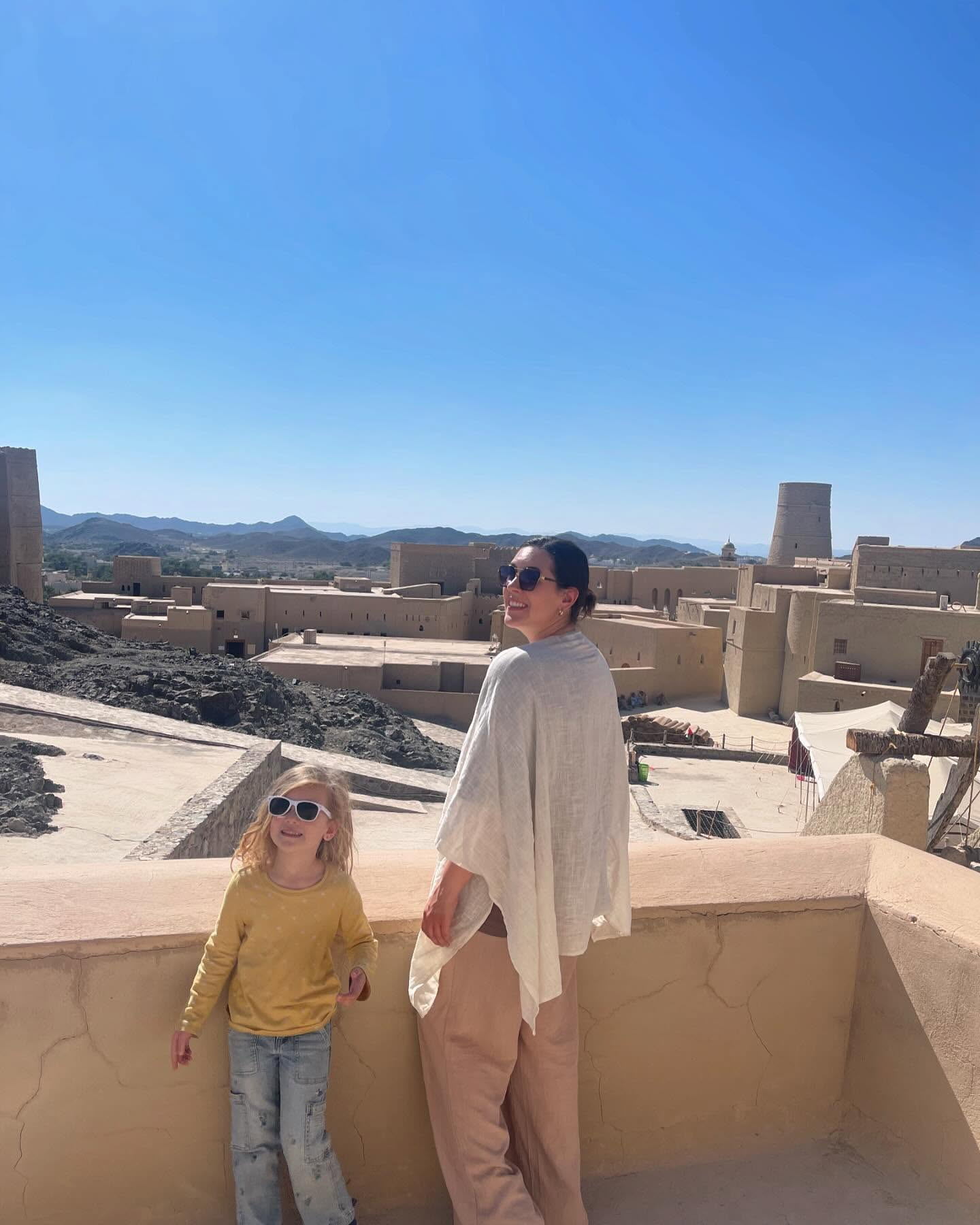
Packing for a family trip to Oman requires a little more thought than a typical vacation. From hot desert days and cooler mountain evenings to cultural dress expectations and outdoor adventures, knowing what to pack for Oman can make your trip far more comfortable—especially when traveling with kids. This Oman packing list for families covers everything you need, including clothing, travel essentials, helpful products, and important items to organize before you go.
Table of contents
- Explore Our Complete Oman Travel Guide
- Important Things to Know Before Packing for Oman
- Essential Travel Documents & Pre-Trip Must-Haves
- What to Wear in Oman: Family-Friendly Clothing Essentials
- Seasonal Packing Tips for Oman
- Outdoor & Adventure Gear for Oman
- Family Travel Essentials & Helpful Products
- Health, Safety & Comfort Items to Pack
- What NOT to Pack for Oman
- Being Prepared is Key
Bookmark these reads for later:
- 7-Day Oman Family Itinerary: Explore the Best of Oman!
- Why Visit Oman With Kids: The Ultimate Family Adventure
- Self-Drive Tips in Oman: Travel the Stunning Roads | Complete Guide
- Oman Travel Tips: Everything You Need to Know Before Your First Trip
- UNESCO World Heritage Sites in Oman: The 5 Must-See Sites!
- Oman’s Most Fascinating Forts and Castles You Need to Visit!
- Best Things to Do in Muscat, Oman: Complete Travel Guide
- Best Places to Visit in Northern Oman: 10 Breathtaking Highlights
- Things to Do in Oman with Kids: Ultimate Family Travel Experiences
- Jebel Shams Balcony Walk Hike: Oman’s Best Trail (Full Guide)
- The Most Stunning Wadis in Oman – Go Beyond Wadi Shab
- Family-Friendly Desert Camp in Oman: Thousand Nights Camp Review
- Top Foods To Try in Oman: 10 Dishes You Can’t Miss!
Explore Our Complete Oman Travel Guide
Whether you’re mapping out your itinerary, packing your bags, planning family adventures, or hitting the road on your own schedule, you’ll find everything you need here to create a truly magical trip.
Keep the kids entertained and learning on your Oman adventure!
Our digital kids’ activity books are packed with screen-free fun—coloring pages, puzzles, and fascinating facts about Oman. Designed for every stage of your trip, they include educational pages to prep before you go, activities and games for airplane or car journeys, and interactive pages to document their adventure with bucket list checklists, favorite foods, and spots to draw their favorite memories.

This blog may contain affiliate links. If you make a purchase through any of these links, I may earn a small commission at no additional cost to you. Additionally, this blog may contain credit card links. Please review the terms and conditions on any card before applying. I only recommend products and services I genuinely trust and think you’ll find valuable. Your support helps sustain this blog, thank you!
Important Things to Know Before Packing for Oman
Oman is a safe, welcoming, and family-friendly destination, but its climate and culture influence what you should bring. Days can be extremely hot, especially in summer, while evenings in the mountains or desert can be cooler. Modest clothing is appreciated in public places, and many of Oman’s top attractions involve outdoor activities like hiking, swimming in wadis, and long road trips. Packing with these factors in mind will help your family stay comfortable and prepared throughout your trip.
Before you start packing for Oman, it’s important to research the weather during the time of year you’ll be visiting. You’ll also want to think about the activities you have planned—whether that’s swimming, hiking, or exploring cultural and religious sites such as mosques. Both the climate and your itinerary will have the biggest impact on what you should bring. Below, we’ve outlined essential items to pack, what’s worth leaving at home, and the must-haves to ensure a smooth and enjoyable visit to this beautiful country.
Essential Travel Documents & Pre-Trip Must-Haves
Before you even start packing your bags, there are a few essential items you’ll want to organize in advance. These travel documents and logistics are just as important as clothing and gear—and having them prepared ahead of time will save you stress, time, and potential issues once you arrive in Oman.
What to organize before you leave:
- Passport with at least six months’ validity
- Oman visa or eVisa (if required for your nationality)
- Travel insurance covering medical care and outdoor activities
- Printed and digital copies of important documents
- Driving license and International Driving Permit (if renting a car)
- Travel credit cards and some local cash
- eSIM or SIM card for mobile data and navigation
Passport (with at least six months’ validity)
Many countries require passports to be valid for at least six months beyond your planned departure date, and Oman is no exception. This rule exists to ensure travelers don’t overstay or face passport expiration issues while abroad. If your passport is close to expiring, you may be denied boarding by the airline or refused entry upon arrival. Always double-check your expiration date well before your trip and renew early if needed.
Oman Visa or eVisa (if required)
Visa requirements for Oman depend on your nationality:
- U.S. citizens: Can typically enter Oman visa-free for short stays (usually up to 14 days) or apply for an eVisa for longer visits.
- UK and EU citizens: Most are eligible for visa-free entry for short stays, with eVisas available for longer trips.
- Australian citizens: Generally eligible for visa-free entry for short stays or can apply for an eVisa in advance.
For longer stays or multiple entries, applying for an Oman eVisa online before departure is recommended. Visa rules can change, so always confirm current requirements based on your passport before traveling.
Travel Insurance
Travel insurance is a must, especially if you plan to hike, explore deserts, go off-road, or visit remote areas. Medical evacuation and emergency care can be extremely expensive, particularly outside major cities. While Oman does not generally require travel insurance for entry, it’s strongly recommended.
Keep in mind:
- Most domestic health insurance plans do not cover you overseas
- Some medical facilities may require payment upfront
- Outdoor and adventure activities often require specific coverage
A comprehensive travel insurance policy gives peace of mind in case of illness, injury, delays, or unexpected changes. We usually use Squaremouth to search and compare travel insurance plans before every trip. It allows us to easily compare coverage options, limits, and prices from multiple providers in one place, making it simple to find the exact level of coverage we need—without going over budget.
Printed and Digital Copies of Important Documents
Always carry physical and digital copies of your passport, visa, travel insurance, and ID. We photocopy all of our documents before every trip so we have backups in case of loss or emergency. Folded copies are easy to keep in your wallet or day bag while leaving the originals secured in your accommodation’s lockbox.
Some countries require travelers to carry identification at all times. However, due to theft and pickpocketing risks, we don’t recommend carrying your original passport unless absolutely necessary. When driving, you should always have your original documents with you—otherwise, copies are usually sufficient for day-to-day exploring.
Driving License & International Driving Permit (IDP)
If you plan to rent a car, bring your regular driving license and consider getting an International Driving Permit (IDP). In the U.S., you can get one for about $20 at any AAA office.
Oman does not always require an IDP for short-term visitors using English-language licenses, but some rental agencies may ask for it. We always get one anyway—it’s inexpensive, easy to obtain, and avoids complications. IDPs are typically valid for one year, so they can be used for multiple trips.
Credit Cards & Local Cash
It’s wise to travel abroad with at least two credit cards. We usually bring one Visa and one MasterCard, since some vendors may accept one but not the other (though most accept both). Make sure the cards you choose don’t charge foreign transaction fees—this can save you a significant amount of money. The cards that usually come along with us these days are the Capital One Venture X and the Chase Sapphire Preferred.
Alert your credit card company!
Be sure to alert your credit card issuers before travel so your cards don’t get locked for suspicious activity. We’ve had one of our cards locked while traveling before and being stuck without a payment method is definitely something you want to avoid.
Credit cards are widely accepted in Oman, but it’s still important to carry some local currency (Omani Rial) for smaller shops, tips, and cash-only accommodations.
We recommend ordering local currency through your home bank before your trip, as this is often the most cost-effective option with little to no conversion fees. Airport exchanges and currency offices usually have higher rates. Don’t exchange too much—converting leftover money back to USD often means losing value.
We also carry some USD as a backup, which can be exchanged locally if needed. This is often cheaper than withdrawing cash from ATMs abroad, where fees can be high. Any cash leftover simply comes back with us to use at home.

eSIM or SIM Card for Mobile Data
Reliable mobile data is essential for navigation, communication, and booking on the go. We almost always use Holafly or Airalo for eSIMs while traveling.
Get 15% off!
Click here for 15% off your first purchase on an eSIM with Airalo
A few key things to know:
- Your phone must be unlocked to use an eSIM (we had to pay off our phones and request unlocking from our carrier)
- Holafly offers unlimited data plans
- Airalo offers pay-per-GB plans
We usually put unlimited data on one phone for GPS and daily use, and a smaller, per GB plan on the other for emergencies. These eSIMs don’t include a local phone number, but data access allows us to use WhatsApp to communicate with each other, family, guides, and hosts.
Be sure to install your eSIM before your flight while you still have WiFi. It needs an internet connection to activate, and not all airports offer reliable WiFi—we’ve learned this the hard way!
What to Wear in Oman: Family-Friendly Clothing Essentials
Understanding what to wear in Oman helps families blend in comfortably while staying cool. Lightweight, breathable fabrics are essential, and clothing that covers shoulders and knees is recommended in towns, mosques, and cultural sites.
Everyday Clothing for Oman
These items work well for sightseeing, road trips, and daily activities:
- Loose-fitting tops made from cotton or linen.
- Long pants, lightweight trousers, or midi skirts.
- Comfortable dresses with sleeves or layering options: Pairing strapless or spaghetti strap dresses and tops with a light scarf or wrap for shoulders is a great idea.
- Light layers for air-conditioned spaces and evenings. It can get chilly at night or in the mountains, so bringing a sweater or light fleece is a good option.
- Modest swimsuits: covering shoulders and knees for men and women.
- Sleepwear suitable for warm nights.

What to Wear in Oman for Kids
Kids need practical, comfortable clothing that allows them to move and play. They are generally exempt from strict dress codes at cultural sites, but modest clothing for young girls is preferred.
- Breathable tops and shorts or lightweight pants.
- Sun-protective clothing with UV protection.
- Swimwear for beaches and wadis.
- Modest outfits for visiting mosques or towns.
Footwear to Pack for Oman
The right shoes are essential for Oman’s varied terrain:
- Comfortable walking shoes for cities and attractions.
- Hiking boots or trail shoes for mountains and wadis.
- Sandals for casual days or desert trips.
- Water shoes for rocky swimming spots: Many beaches are rocky, not sandy.
Seasonal Packing Tips for Oman
Your packing list should vary depending on the time of year you plan to visit, as Oman has two distinct seasons with different weather patterns across the north and south.
Summer (May – September)
Climate Overview:
- North Oman (Muscat, Nizwa, coastal areas): Extremely hot and dry.
- Average daytime: 38–45°C (100–113°F)
- Nighttime: above 30°C (86°F)
- South Oman (Dhofar, Salalah): Khareef (monsoon) season brings cooler temperatures, mist, and occasional light rain.
- Average highs: 25–30°C (77–86°F)
What to Pack for Summer:
- Lightweight, breathable clothing (linen, cotton, loose-fitting)
- Wide-brimmed hat and sunglasses
- High-SPF sunscreen
- Cooling towels, neck wraps, or portable fans
- Comfortable sandals or breathable shoes
- Reusable water bottle
- Optional (South Oman/Dhofar): Light rain jacket or windbreaker
Winter (October – April)
Climate Overview:
- North Oman: Mild days (24–30°C / 75–86°F) and cooler nights (12–18°C / 54–64°F).
- South Oman: Pleasant temperatures (23–28°C / 73–82°F) with mostly dry weather.
What to Pack for Winter:
- Long sleeves and layers for cooler mornings and evenings
- Lightweight tops for daytime sightseeing
- Light jacket, fleece, or sweater for evenings and high-altitude areas
- Closed-toe shoes for cooler nights or mountain hikes
- Sunglasses and a hat

Outdoor & Adventure Gear for Oman
Oman’s landscapes are a major highlight, and packing the right gear helps families enjoy them safely.
Recommended outdoor items:
- Daypack for hikes and sightseeing.
- Reusable water bottles with insulation to keep water cold.
- Dry bags for wadis and beach days.
- Snorkel gear (optional but useful): We saw turtles swimming just offshore at the beach!
- Sun hats, sunglasses, and lightweight scarves.
- Headlamp or flashlight if you plan to visit caves or camp.
- Hiking boots and trekking poles if you plan on multi-day or strenuous hikes.
- Portable GPS for longer or more difficult hikes, especially if traveling alone.

Family Travel Essentials & Helpful Products
Long drives and full sightseeing days are common in Oman. These family travel essentials help keep kids comfortable and entertained.
Looking for a full list of tried and tested travel essentials?

Helpful items for families:
- Sunglasses: There were very few days with any clouds in the sky.
- Hats to protect from the sun.
- Snacks from home and refillable containers.
- Refillable and insulated water bottles.
- Portable power banks to charge phones and devices.
- Travel games, small toys, or tablets for kids (helpful for long drives).
- Small laundry bag to keep dirty clothes separate.
- Compact travel stroller (if needed). We didn’t need our stroller at all.
- Baby carriers for wadis and hiking trails (if children can’t or won’t walk). We always take one soft carrier for each kid just in case.

Health, Safety & Comfort Items to Pack
Packing basic health supplies ensures minor issues don’t disrupt your trip.
Health and comfort essentials:
- Basic first-aid kit: bandages, antibiotic ointment, children’s and adult versions of pain reliever, fever reducer, and antihistamine, alcohol wipes, and gauze pads are essential.
- Prescription medications, in labeled containers.
- Sunscreen and after-sun lotion.
- Insect repellent -although we never encountered mosquitoes, it’s wise to have.
- Hand sanitizer and wipes.
- Motion sickness remedies (our kids have sensitive tummies!)
What NOT to Pack for Oman
Avoid overpacking by leaving behind items you can easily buy in Oman and impractical or illegal items:
- Heavy winter clothing
- Excessive toiletries
- Formal wear (unless needed for something specific)
- Bikinis or revealing clothing
- Drone: not legal to fly without a permit
- Umbrella and raingear
Oman is one of the driest countries in the world, receiving only about 10-15 rainy days in an entire year. In the North of Oman, January-April have the highest chances of rain, but even then, the country averages only about 1-3 rainy days per month. It’s not worth packing an umbrella or even a raincoat. Even when it rains, it’s not very much.
Being Prepared is Key
Packing for Oman is all about balance—bringing what you need without overloading your bags. By focusing on lightweight clothing, practical footwear, and essential travel items, your family will be well prepared for Oman’s diverse landscapes and cultural experiences. This Oman packing list for families is designed to help you travel confidently, comfortably, and ready for adventure.
Happy travels!
Check out our video from Oman:



Leave a Reply