
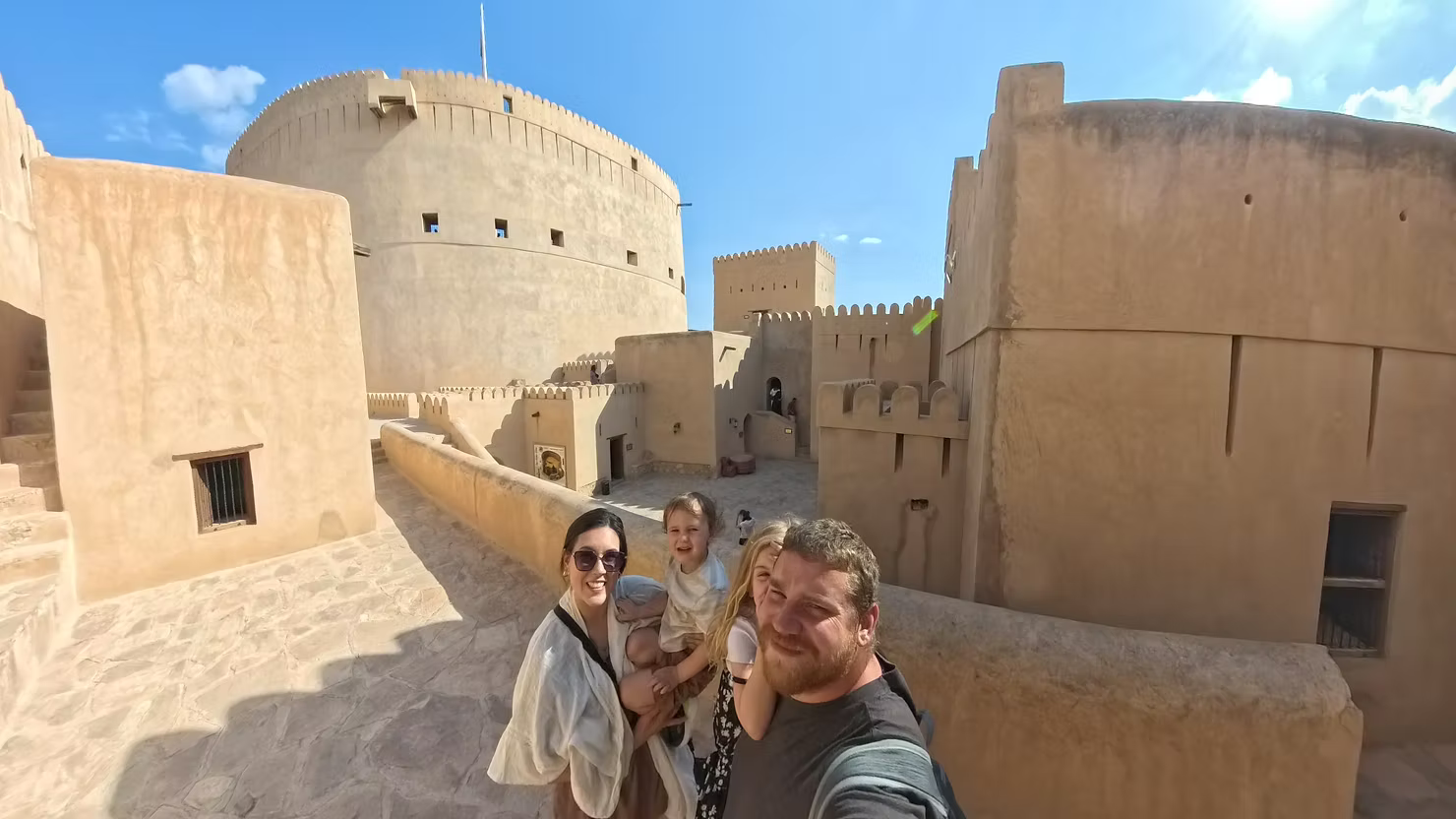
Oman, located on the southeastern coast of the Arabian Peninsula, is renowned for its rich history, diverse landscapes, and warm hospitality. With its stunning coastline along the Arabian Sea, dramatic mountain ranges, vast deserts, and ancient forts, Oman offers the perfect mix of natural beauty and cultural heritage. Its traditional souks, historic sites, and unique architectural landmarks reflect a history as a crossroads of trade and cultural exchange. Known for preserving both its natural resources and cultural traditions, Oman is an ideal destination for families seeking adventure, relaxation, and unforgettable experiences.
In this blog, we’ve curated the ultimate 7-day Oman family itinerary to help you explore the best of the country. This itinerary combines pristine beaches, vibrant city attractions, fascinating historical landmarks, and outdoor adventures perfect for kids and adults alike. From the bustling streets of Muscat to the tranquil Omani coastline, and from awe-inspiring mountains to vast deserts, this guide ensures your family experiences the diverse essence of Oman in just seven days. Whether you’re looking to relax by the beach, immerse yourselves in history, or enjoy outdoor activities like hiking, turtle watching, and desert exploration, this itinerary covers everything you need for an unforgettable family adventure.
Table of contents
- Explore Our Complete Oman Travel Guide
- Climate and Weather in Oman
- Cultural Information and Norms
- Ease of Transport
- Day 1 – Exploring The Capital City, Muscat
- Day 2: Daymaniyat Islands
- Day 3: Journey Down The Coast
- Day 4: Turtles and Wadis
- Day 5: Wahiba Sands Desert
- Day 6: The Historic Town Of Nizwa
- Day 7: Jebel Shams
Bookmark these reads for later:
- Why Visit Oman With Kids: The Ultimate Family Adventure
- UNESCO World Heritage Sites in Oman: The 5 Must-See Sites!
- Oman Packing List for Families: What to Pack for Every Season
- Oman’s Most Fascinating Forts and Castles You Need to Visit!
- Best Things to Do in Muscat, Oman: Complete Travel Guide
- Self-Drive Tips in Oman: Travel the Stunning Roads | Complete Guide
- Best Places to Visit in Northern Oman: 10 Breathtaking Highlights
- Things to Do in Oman with Kids: Ultimate Family Travel Experiences
- Jebel Shams Balcony Walk Hike: Oman’s Best Trail (Full Guide)
- The Most Stunning Wadis in Oman – Go Beyond Wadi Shab
- Family-Friendly Desert Camp in Oman: Thousand Nights Camp Review
- Top Foods To Try in Oman: 10 Dishes You Can’t Miss!
Explore Our Complete Oman Travel Guide
Whether you’re mapping out your itinerary, packing your bags, planning family adventures, or hitting the road on your own schedule, you’ll find everything you need here to create a truly magical trip.
Keep the kids entertained and learning on your Oman adventure!
Our digital kids’ activity books are packed with screen-free fun—coloring pages, puzzles, and fascinating facts about Oman. Designed for every stage of your trip, they include educational pages to prep before you go, activities and games for airplane or car journeys, and interactive pages to document their adventure with bucket list checklists, favorite foods, and spots to draw their favorite memories.

This blog may contain affiliate links. If you make a purchase through one of these links, I may earn a small commission at no extra cost to you. I only recommend products and services I believe are valuable, and any opinions shared are my own. Your support helps sustain our blog. Thank you!
Climate and Weather in Oman
During the October to April window, the climate in Northern Oman is at its best, making it the ideal time for families to visit. Daytime temperatures usually sit around 25°C (77°F), which is perfect for hiking, sightseeing, and enjoying Oman’s natural landscapes without overheating. This is also the most comfortable season for kids, especially if you plan to spend time outdoors.
Summer, on the other hand, can be intense. From May to September, temperatures often soar above 40°C (104°F), and the heat can make even short walks feel exhausting. Coastal areas like Muscat also become extremely humid, which may be uncomfortable for little ones. If you do visit during the warmer months, plan indoor activities, early mornings, and late evenings.
Rain is rare in Oman, but light showers can occur between November and March, bringing a pleasant break from the sunshine. Overall, if you’re looking for the most enjoyable weather — especially with kids in tow — the cooler season is by far the most family-friendly time to explore.

Cultural Information and Norms
Oman respects its conservative Islamic culture deeply, and visitors are expected to do the same. Dressing modestly is advised for both men and women, with clothing that covers shoulders and knees in most public places. This is especially important when visiting mosques, traditional souks, and rural areas, where cultural expectations are higher. Women may be asked to cover their hair when entering a mosque, and both men and women should avoid tight or revealing clothing. Swimwear is acceptable at hotel pools or designated tourist beaches, but not on public beaches or in local neighborhoods.
Public displays of affection, such as hugging, kissing, or holding hands, are generally considered inappropriate. A simple, respectful greeting—like a nod, smile, or saying “Salaam”—is customary. When interacting with locals, especially older Omanis, using your right hand for handshakes or gestures is considered polite.
Understanding local laws is also important. Alcohol is available in licensed hotels and restaurants, but drinking in public is strictly prohibited and can result in fines. Purchasing alcohol is limited to designated stores, and only residents with permits may buy it for home use. Visitors should avoid being intoxicated in public, as it’s taken very seriously.
Photography is usually welcome in public areas, but you should always be cautious when taking pictures of people or sensitive locations. Avoid photographing military bases, government buildings, airports, and police stations. Many Omanis, especially women, prefer not to have their photo taken—always ask permission first, and respect a “no” without hesitation.
Omani’s value politeness, patience, and calm interactions. Whether you’re navigating a market, asking for directions, or dining out with kids, kindness and respect go a long way and are always warmly reciprocated.
Ease of Transport
Navigating Oman is fairly straightforward, making it a fantastic destination for a stress-free family road trip. Muscat is home to a well-connected international airport with flights from major hubs across Europe, Asia, and the Middle East. Once you arrive, transportation options include taxis, ride-hailing services like Otaxi, and widely available car rentals. Taxis are reliable but can become expensive for longer distances, which is why most travelers opt to rent a car.
If you’re planning to explore beyond Muscat—and you definitely should—a 4×4 vehicle is highly recommended. While many major roads are paved and well-maintained, some of Oman’s most breathtaking destinations involve gravel tracks, mountain roads, or soft sand, where extra traction is essential. Places like Jebel Shams, Wadi Bani Khalid, or the Wahiba Sands desert are much safer and more comfortably reached with a 4×4.
Oman’s road system is modern, well-marked, and easy to navigate, with English signage common throughout the country. Highways are smooth, traffic generally flows calmly, and enforcement cameras help ensure safe driving conditions. Scenic drives—whether along the coastline or through dramatic mountain passes—are a highlight of any trip and often become part of the adventure itself.
Renting a car remains the best option for families, offering the flexibility to move at your own pace, stop for photo opportunities, and detour to hidden gems that tour groups often miss. A standard 2WD rental averages around $200 per week, while a 4×4 typically costs about double. Most travelers find the upgrade worth it for peace of mind and access to more remote locations. If you’re traveling with kids, consider renting a vehicle with good storage for luggage and car seats, and book early during peak season to secure the best rates.

Day 1 – Exploring The Capital City, Muscat
Your adventure begins in Muscat, the country’s capital city, where you can immerse yourself in its rich culture and stunning architecture. Take note that Muscat doesn’t have any skyscrapers like other big cities. This is because Muscat places a strong emphasis on preserving its traditional cultural and architectural heritage. The city has strict building regulations that aim to maintain its historical character and visual appeal. The government has implemented zoning laws that limit the height of buildings, ensuring that new constructions blend harmoniously with the city’s traditional Arabian-style architecture and the surrounding natural landscape.
Our tour guide Ahmed informed us that until recently, all buildings were required to be white or beige.
Sultan Qaboos Grand Mosque
Start at the Sultan Qaboos Grand Mosque, an awe-inspiring structure that can accommodate up to 20,000 worshippers. The mosque is famous for its grand prayer hall, which houses the second-largest hand-woven carpet in the world, measuring 4,268 square meters (45,962 square feet).
And don’t forget to check out the massive library and Islamic Information Center, where you can get more information, including free literature on Islam.

Royal Opera House Muscat
Next, explore the Royal Opera House Muscat. This architectural gem showcases Arabian design and offers guided tours that provide insights into both its design and role in Oman’s cultural scene. The opera house opened in 2011 and is the first opera house in Oman and one of the most prestigious cultural venues in the Gulf region.
The opera house is a venue for a variety of performances, including opera, ballet, classical music, concerts, and other cultural events. It plays a central role in promoting the arts and cultural exchange in Oman.
The main auditorium has a seating capacity of 1,100 people, with state-of-the-art acoustics and facilities. A unique feature of this opera house is that each seat has its own screen, where operas and plays are translated into a number of different languages.


Wondering where to stay in Muscat? Check out our list of top family hotels!
Qurum Beach
After immersing yourself in Omani culture, spend some time unwinding at Qurum Beach. This beautiful stretch of sand is perfect for relaxation, and you can sample local seafood at one of the nearby cafes. Take time to watch the waves crash or take a dip in the warm waters. Have some lunch at a nearby restaurant and get ready to see more of the beautiful city of Muscat.

Al Alam Palace
In the afternoon, don’t miss visiting Al Alam Palace, beautifully framed by the twin forts, Al Mirani and Al Jalali. The colorful buildings create an incredible backdrop for photos.
Al Alam Palace is the ceremonial palace of the Sultan of Oman, located in the heart of Muscat. It features a striking blend of modern and traditional Omani architectural styles. Its colorful blue and gold facades and grand entrance reflect Islamic and Arab design influences, with a focus on symmetry and intricate details.

While you cannot enter the palace, you are free to walk around the grounds, admiring the beautiful architecture and stunning greenery. Also consider checking out Al Mirani Fort, located just behind the palace, for amazing views over the ocean and the palace.
Mutrah Souq
To conclude the first day, take a walk through the lively Mutrah Souq. The market is alive with colors and scents, featuring spices, textiles, and souvenirs. Be ready to engage in some friendly bargaining—all part of the fun!
Here you’ll find an overwhelming number of shops, all displaying the most colorful and authentic goods. Browse the many alleys selling everything from children’s toys to sweets. And don’t forget to stop by an Omani sweet shop to sample some Halwa.
When the souq becomes too chaotic, walk over toward the water and take a stroll along the Mutrah Corniche for excellent views over the water and the beautiful Al Sultan Qaboos Port Ship.
Day 2: Daymaniyat Islands
On your second day, set sail for the Daymaniyat Islands, a group of stunning islands that serve as a protected nature reserve. The waters around the islands are home to diverse marine life, including sea turtles and vibrant coral reefs.
Here, snorkeling or diving is an unforgettable experience. Expect to encounter a multitude of colorful fish, making it a paradise for marine enthusiasts. Don’t forget your underwater camera to capture these unforgettable moments!
Bring along a picnic to enjoy on the beach, surrounded by the breathtaking natural scenery. The tranquil atmosphere here makes it an ideal spot to recharge. Or purchase a trip through a tour company that offers lunch.
Looking for the best day trips from Muscat? Read our complete guide!
Day 3: Journey Down The Coast
Driving down Oman’s coastline gives you the chance to enjoy scenic beaches, dramatic cliffs, and some of the country’s most iconic natural attractions. It’s the perfect blend of adventure and relaxation for families.
On day 3, begin with a journey down the coast, stopping at beautiful natural attractions on the way.
Bimmah Sinkhole
Your first stop of the day is Bimmah Sinkhole. This deep pool is filled with stunning turquoise water and is perfect for a refreshing swim on a warm day. Local legend claims the sinkhole was formed by a meteor or a gigantic footprint, adding to its mystique.

Wadi Shab
After your swim, venture onward to Wadi Shab, recognized as one of Oman’s most beautiful wadis. A 1.5-hour hike leads you through breathtaking landscapes of rocky formations and lush date palm groves, culminating at a captivating waterfall. Be sure to wear sturdy shoes and bring plenty of water and snacks for this invigorating adventure.
If you’d like, you can even bring a bathing suit and swim in one of the wadi’s pools or bring a picnic lunch to enjoy by the water.
Make sure to bring a small amount of cash as it will be necessary to take a small boat from one side of the wadi to the other in order to start the hike.
The boat cost 1 OMR per person as of January 2025.

To end the day, consider stopping by the beautiful Pebbles beach, where you might be lucky enough to spot turtles swimming just offshore.

If you have extra time, consider checking out other beaches in the area or walking along the Sur Corniche. You could also browse the Sur Souq, check out a lighthouse, or simply enjoy a traditional Omani meal at a local restaurant.
Stay the night in a hotel, guesthouse, or campsite near Sur.
Check out these great options:
Day 4: Turtles and Wadis
On day 4, wake up early and head about 30 km east of Sur to the Ras Al Jinz Turtle Reserve.
This day combines two of Oman’s most memorable experiences—seeing nesting turtles and exploring lush wadis. It’s a mix of education, soft adventure, and refreshing swims that the whole family will love.
Ras Al Jinz Turtle Reserve
Ras Al Jinz Turtle Reserve is an important nesting site for green turtles and the only legal turtle-watching spot in the whole of Oman.
The reserve provides educational exhibits and guided tours at dawn and dusk. These guided tours take you to the beach to spot turtles laying eggs or even witness some of those eggs hatching. May to September is the best time to see turtles laying their eggs; however, turtles can be seen on the beach year-round.
As an alternative, you could skip the turtle reserve and head directly to the next stop or even take some more time exploring the city of Sur or nearby beaches.
Wadi Bani Khalid
In the afternoon, head to Wadi Bani Khalid. This wadi is one of the largest and most accessible in Oman. Entry is free, and this is one of the best places for a swim apart from the beaches of Oman.
Here, you’ll find large pools, hiking trails, waterfalls, and even a cave. Feel free to take a picnic lunch, bring your bathing suit, and suitable hiking shoes so you can explore all the Wadi area has to offer.


After your time at Wadi Bani Khalid, head to your chosen desert resort or the designated pickup point (likely near the town of Bidiyah). Check into your desert camp to experience true Bedouin hospitality. Tomorrow begins your desert adventure!
Day 5: Wahiba Sands Desert
Experience the magic of Oman’s desert with golden dunes stretching endlessly in every direction. Kids and adults alike will enjoy dune bashing, camel rides, and an unforgettable night under the stars.
On Day 5, wake up and immerse yourself in the breathtaking Wahiba Sands, famous for its rolling sand dunes. Many camps provide a host of activities such as camel rides or thrilling dune-bashing excursions, all giving unique perspectives on the mesmerizing desert scenery. You can even hire a trekking guide to take you out into the desert or take a guided ATV adventure.
As night descends, have a traditional Omani dinner, gather around the campfire, and feel the calmness of the desert. Wahiba Sands offers an unparalleled chance to soak in the brilliance of the night sky and makes for fantastic stargazing as well.
Discover the best family-friendly luxury desert camp in Oman!


Take a sunset camel ride to the top of the dunes and watch the sun disappear beyond the sand.
Day 6: The Historic Town Of Nizwa
Nizwa is the cultural heart of Oman, offering historic forts, lively souks, and insights into the country’s traditions. It’s an excellent place for families to learn and explore at a relaxed pace.
Day 6 takes you to Nizwa, the former capital of Oman, filled with history and charm. Start your visit with Nizwa Fort, constructed in the 17th century. The fort showcases Oman’s illustrious past and offers a museum that provides insights into the region’s heritage and significance as a trading center.
Navigate through the many rooms, each serving a unique purpose. You’ll see rooms such as date storage, prisons, and coffee-making rooms. There are also numerous exhibits, showcasing jewelry, clothing, and other artifacts of historic significance.

Explore the traditional old town, where the local souqs present an array of handicrafts, silverware, and spices. If you happen to be there on a Friday, don’t miss the bustling livestock market where locals trade cows, goats, and other animals. Make sure you arrive early, as the locals begin gathering after sunrise.

Nizwa also boasts beautiful date palm groves and stunning vistas of the surrounding mountains, making it a delightful spot for photography.
In the evening, indulge in a traditional Omani meal at a local restaurant. Dishes like shuwa (slow-cooked marinated lamb) and harees (a wheat-based dish) are rich in flavor and history, enhancing your culinary experience.
If you have extra time, consider a visit to Bahla Fort – a UNESO World Heritage Site. It’s only about a 30-minute drive from Nizwa and even larger and more breathtaking than Nizwa Fort (in our opinion).

Day 7: Jebel Shams
On your last day, set your sights on Jebel Shams, revered as Oman’s Grand Canyon. The scenic drive offers stunning landscapes and mountain views. Consider staying at a resort or guesthouse with a view of the canyon. Popular choices include Jebel Shams Resort and Jebel Shams Domes.
Upon arrival, consider hiking the popular Balcony Walk, a breathtaking trail that takes approximately 4 hours round-trip. The dramatic views of rugged cliffs and deep valleys make every step worthwhile.

If you seek further adventure, venture to Wadi Nakhr, which offers additional hiking trails and spectacular views. Navigating this rocky region will require a 4×4 vehicle, adding to the fun of your expedition. But don’t worry if you don’t have a 4×4 vehicle, as it’s easy to book a local guide to take you in theirs.
Oman is a land filled with history, rich culture, and stunning natural beauty. This 7-day itinerary offers a comprehensive experience, combining urban exploration with exhilarating outdoor activities. With every hidden gem you discover, you gain a deeper appreciation for Oman’s diverse heritage.
Whether you are lounging on pristine beaches, hiking breathtaking trails, or discovering ancient forts, Oman promises unforgettable memories that will last a lifetime. Pack your bags and prepare for an adventure in this extraordinary region!
Check out our video from Oman:


Leave a Reply