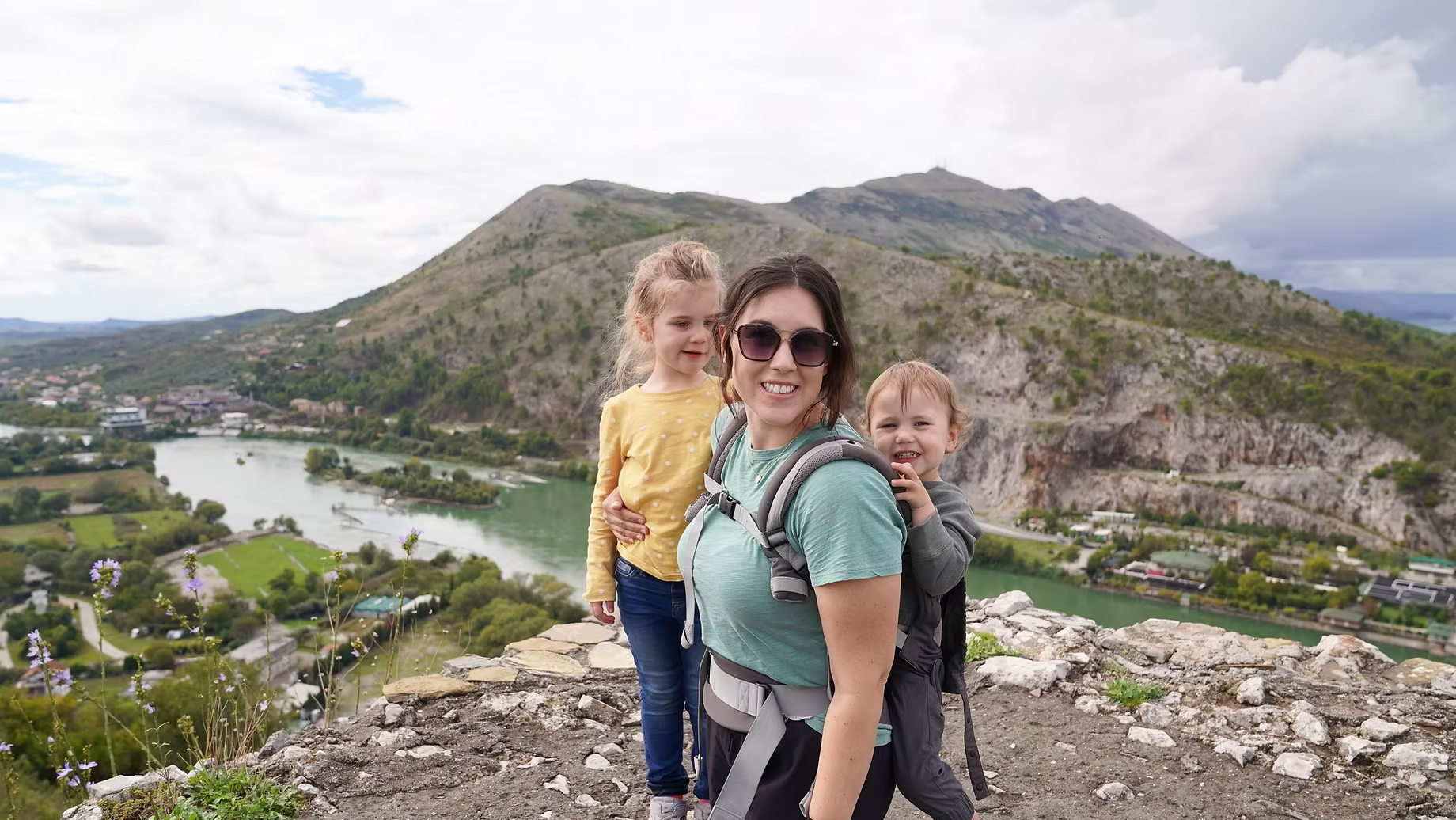
Planning a family trip to Europe, but worried about the cost? You might be wondering: Is Albania affordable for families? After spending two weeks exploring the country with our family, we were surprised by just how budget-friendly it can be.
Albania is quickly becoming one of Europe’s most talked-about destinations—and once you visit, it’s easy to see why. This small Balkan country is packed with dramatic mountains, beautiful beaches along the Albanian Riviera, historic towns, and a vibrant local culture. Even better, many of these experiences come at a fraction of the price you’d expect in other European destinations.
During our two-week family trip, we explored everything from charming villages and UNESCO-listed cities to stunning coastlines, all while keeping a close eye on our travel budget. In this guide, we’ll break down our real Albania travel costs for a family, share exactly what we spent in two weeks, and give practical tips to help you plan an affordable family trip to Albania.
If you’re curious whether Albania can fit into your family travel budget, this breakdown will help you plan a memorable trip without overspending.
Shop Our Kids Activity Workbooks – Available As Instant PDF Downloads!

This post may contain affiliate links. If you use these links to buy something, I may earn a commission at no additional cost to you. I only recommend products and services I genuinely use or trust. Affiliate links help sustain our blog. Thanks for your support.
Is Albania Affordable for Families? The Short Answer
Yes!
The good news is that Albania is one of the most affordable countries in Europe. The bad news is that as it becomes more popular, prices are expected to rise.
Why Choose Albania
Albania enchants visitors with its diverse landscapes, ranging from the striking blue waters of the Ionian Sea to the rugged beauty of the Albanian Alps. Ancient ruins, Ottoman-era towns, and vibrant cities like Tirana offer a glimpse into the country’s rich history and evolving culture.
The Albanian Riviera boasts pristine beaches and charming coastal villages, while the lush countryside is dotted with castles, UNESCO-listed sites, and traditional stone houses. Adventurers can explore hidden caves, hike through breathtaking mountain trails, or take a scenic boat ride along Komani Lake.

Combined with the warmth of Albanian hospitality and a rich culinary scene influenced by Mediterranean and Balkan flavors, Albania captivates travelers seeking both relaxation and exploration in an off-the-beaten-path destination.
Check out these fun facts about Albania:
- Bunker Nation – Albania has over 170,000 concrete bunkers scattered across the country, built during its communist era. Some are now turned into museums, cafes, or even hotels!
- Yes Means No – Albanians nod their heads up and down for “no” and shake them side to side for “yes”, which can be confusing for visitors.
- Stunning Beaches – The Albanian Riviera is home to crystal-clear waters and unspoiled beaches, rivaling those of Greece and Italy but at a fraction of the cost.
- No McDonald’s – Albania is one of the few European countries without a McDonald’s, but don’t worry—its local fast food and traditional cuisine are delicious!
- Friendly Locals – Albanians are incredibly hospitable, and it’s common for strangers to invite you for coffee or a meal.
- Driving is an Adventure – Roads can be unpredictable, and Albanian drivers are known for their “creative” driving style, so be prepared if renting a car!
- Ancient Ruins – Albania is home to UNESCO sites like Butrint, an ancient Greek and Roman city, and Gjirokastër, a stunning Ottoman-era town.
- Breathtaking Nature – From the Albanian Alps to Lake Ohrid, Albania has incredible landscapes perfect for hiking and exploring.

This relatively small nation is a blend of Mediterranean influences, Ottoman architecture, and a history dating back thousands of years. Spend your days wandering through ancient ruins, climbing fortresses and castles for stunning views, and tasting the wide variety of delicious cuisine offered here.
Choosing Albania allows you to immerse yourself in its traditions, explore its unique history, and enjoy all the vacation experiences you seek, at a more affordable cost.
It’s reported that the cost of living in Albania is about 65% lower than in many Western European nations. It’s no surprise that Albania is quickly being recognized as one of Europe’s hidden treasures.
Our Real 2-Week Family Travel Costs in Albania
Here’s a brief overview of what our family of four spent on our trip to Albania in the month of October (read on to see specific details).
We spent 14 nights in Albania
We are a family of 4 with kids ages 2 and 4.
| Expense Category | Cost |
| Accommodation (local apartments + Airbnb) | $367.22 |
| Transportation (car rental + gas) | $245 |
| Food (mostly grocery meals) | $530 |
| Activities (entries, tours) | $229 |
| Other (eSIM’s + travel insurance) | $104.40 |
| Total Cost | $1,475.62 |
Prices are in USD, unless otherwise specified.
Note: We aren’t including flights in our total cost because this was part of a larger road trip where we drove across the border from another country.
Flights to Albania: How to Save Money
While we didn’t fly into Albania, here are our best tips to save money on flight costs. If you are flying into Albania, you’ll likely be flying into the capital of Tirana.
Tips for families:
- Check multiple departure airports near you – sometimes one has better flight deals or routes than another.
- Flying midweek or off-season can lower prices.
- Look for deals on budget airlines – don’t limit yourself to searching only one airline.
- Use airline miles or points if possible—it can save thousands for a family of four.
- Travel light and avoid checked baggage if you can – this allows you to take advantage of budget airlines or budget fares that have baggage limits.
- Remain flexible on your travel dates – sometimes flying out a day earlier or later can save hundreds. We recommend always choosing travel dates around flight prices when possible, rather than limiting yourself to a specific departure and return date.
SECRET TIP:
Check out the Capital One Venture X Card, which is a travel credit card that uses Hopper to search flights and therefore offers the same flight watches. Their travel portal makes it easy to search and book flights, set flight alerts, and even freeze the cost of a flight if you aren’t quite ready to book. Additionally, if the travel portal says that a flight is a good deal and prices drop after you book the flight, you’ll get up to $50 back per traveler. We recently got $200 back for a flight we booked when the price dropped a few days later.
This money gets added to your account as a travel credit for a future flight, rental car, or hotel booking. When used in addition to your annual $300 travel credit, it’s a great reason to have the card and book through their travel portal. The annual fee is only $395 and more than pays for itself after a yearly $300 credit, 10,000-anniversary miles each year, as well as other benefits such as airport lounge access (hello free food and drinks!), and even offering coverage for flight delays and lost baggage.
The Capital One Venture X is our favorite travel credit card, and we can bring it on every trip because it has zero foreign transaction fees, meaning we can use it no matter the currency. The card also has a very generous sign-on bonus that fluctuates frequently, from 75,000 up to 150,000 miles! These miles can be used directly for flights, hotels, or rental cars, can be transferred to a host of partner programs to book travel, or can be used as a statement credit.
Timing Your Visit
Choosing the right time to visit Albania can significantly impact your travel costs. While summer (July and August) is the peak season, with higher prices for accommodation and crowded beaches, visiting in the shoulder seasons—late spring (May–June) or early autumn (September–October)—offers a more budget-friendly experience. During these months, you can enjoy pleasant weather, fewer tourists, and lower prices on hotels, flights, and tours. Additionally, local attractions and restaurants are less crowded, allowing for a more relaxed and authentic experience without the summer surge in demand.
Avoid Peak Season
Try to avoid traveling during peak season, which usually falls in the summer months of June through August. August, in particular, is a very busy period in Albania. Based on personal experience visiting major tourist spots during this time, we advise against it. You’ll be met with large crowds, long lines, sweltering temperatures for outdoor activities and events, and increased costs for everything from accommodation to food.
Also, try to avoid typical school holidays such as winter break, spring break, and the week of Thanksgiving. Traveling during major holidays or holiday breaks can lead to increased prices in popular destinations, so keep this in mind when choosing when to book your trip. Keep in mind that Albanian holidays and school breaks may differ from those in your home country. It’s worth doing a bit of research to also try to avoid big Albanian holidays, especially in the summer months, when locals may flock to popular areas such as beaches.
Examples:
- August 15th – Assumption Day; may bring large crowds to religious and pilgrimage sites, such as Apollonia.
- July 2nd – Independence Day in Kosovo; many Albanians living in Kosovo may return to Albanian beaches for this holiday.
Weekends will always be busier than weekdays, as most locals may venture out for weekend getaways to popular locations, such as beaches, on their days off from work.
Travel During Shoulder Season
Traveling during the shoulder season, which is the time before and after peak tourist seasons, can save you up to 30 percent on flights and hotels.
Our favorite times to travel are March, April, September, and October. We find prices are more affordable, and the weather is pleasant for walking around and exploring.
Unless you’ll be at the beach all day, exploring cities and doing activities outside can be tough in the hot summer months, especially when traveling with kids.
Although September and October are considered off-season in Albania, the weather usually remains pleasant enough to swim, making it the perfect time to visit the beaches without the crowds or increased prices.

For example, we spent June to August in Croatia in 2023 and it was 90 °F (32°C) almost every day. This was great for swimming at the beautiful beaches (although they were crowded) but made it very difficult on days when we wanted to walk around the city, explore ancient ruins, or visit National Parks.
Keep in mind, however, that when traveling outside peak seasons, some tourist attractions may have limited hours or may not be open at all. This is something you should research ahead of time.
Budget-Friendly Accommodation
Finding budget-friendly accommodation in Albania is easier than you might think. Whether you’re exploring the bustling streets of Tirana, relaxing on the pristine beaches of the Albanian Riviera, or hiking through the mountains, there are plenty of affordable places to stay without sacrificing comfort.
From cozy guesthouses and hostels to budget hotels and Airbnb rentals, Albania offers a range of options that cater to different travel styles and budgets. Many accommodations provide excellent amenities like free Wi-Fi, breakfast, and even stunning views at a fraction of the cost you’d pay in other European destinations.
Consider apartments over hotels
Airbnb is usually our first choice for unique, budget-friendly accommodation. There are thousands of listings available on the site that range from a private room in someone’s home to entire apartments, villas, and even treehouses.
In our experience, renting an apartment tends to be a cheaper option than a hotel. While hotel rooms in Albania can average USD $50 – $100 a night (even more in peak season), we have booked entire apartments for $20 – $40 per night. In more touristy areas or peak season, these rates can be more, but still less than hotels.
To find affordable stays, you can check a third-party site like Expedia, where you can see a range of options filtered to your specific preferences and budget. You can also find a wide range of apartments and homestays on booking.com that are more affordable than traditional hotels.

Another benefit is that in most cases you’ll have a kitchen with full amenities and cooking utensils. This helps save money on dining, as you can visit a local market or grocery store and cook some of your own meals.
Check multiple sites
While we prefer Airbnb for more budget-friendly stays, we always check a few sites when looking for accommodation. This is because we occasionally find a better deal budget or quality-wise, elsewhere. Sites we always check are Airbnb, booking.com, and Expedia. However, there are a few others like Hotels.com, Agoda, and Kayak that you can also try.
Look into hostels
We don’t have too much personal experience with hostels, but we did take a month-long backpacking trip in our younger years, where we stayed primarily in hostels around Europe. Hostels are a budget-friendly option if you are a solo traveler or a couple, allowing you to connect with other travelers, and they typically cost just USD $5 to $15 per night in Albania. Some hostels even offer shared kitchens, work and lounge spaces, and special events. We have booked hostels on booking.com in the past; however, there are specific sites for hostel booking, such as hostelworld.
Stay outside city centers
Another of our best budgeting tips is to stay a bit further from the city center. Accommodations in city centers come at a premium. Staying a short distance away can save you 20 to 40 percent, especially in cities with good public transport options.
For example, when we visited Tirana, we chose an apartment outside the city center that offered a private parking garage. We got a much cheaper rate than if we had stayed in the city center, had free and secure parking, and were able to easily walk 30 minutes into the center (public transport was available, we just love walking!).
If you have a rental car, we recommend staying as far outside the center as you need to in order to save on accommodations. This is because to get to the center, you have plenty of options. You can take public transport, and when you don’t want to, most cities do have parking options in the center, from metered parking to garages and other paid lots.
In Albania, we find it especially important to find accommodation with private parking as many cities and towns lack ample parking spaces, and street parking can be difficult to find near your accommodation, especially in the evenings. Additionally, driving in city and town centers may involve narrow roads, bad conditions, and an aggressive driving culture.

Take advantage of hotel loyalty programs
Some hotel loyalty programs provide significant discounts or even free nights. This can help stretch your budget even further, particularly in expensive cities. Check your loyalty programs and hotel credit cards for any unused benefits or points that could convert to free stays in your chosen location.
For hotel bookings and free nights, we use the IHG Premier Credit Card and its related rewards program. IHG is one of the world’s largest hotel corporations, with its most famous brand being Holiday Inn. When searching for hotels, many times we notice the cheapest options are IHG hotels. The brand offers budget stays as well as luxury, and has over 6,000 hotels in around 100 countries.
With their free rewards program, IHG One Rewards, you can earn points on eligible stays that can eventually turn into free upgrades, extra amenities, and even free nights.
With their IHG Premier credit card, you gain access to a generous sign-up bonus that equates to up to 4 free nights! Annually, you also get an anniversary free night stay, automatic platinum elite status, $50 United Airlines Travel Bank Cash, $100 statement credit, 10,000 bonus miles, along with tons of other benefits.
Additionally, you get 26X points when booking a stay at one of their hotels or resorts, meaning more points for free stays in the future. And when you use those points to redeem 3 consecutive nights, your fourth night is free!
Looking for a full list of tried and tested travel essentials?

Cutting Costs on Food
Eating well in Albania doesn’t have to break the bank. With its rich culinary scene and affordable local options, you can enjoy delicious meals while keeping your budget in check. From exploring bustling markets and trying traditional street food to dining at family-run restaurants, there are plenty of ways to experience authentic Albanian cuisine without overspending. In this section, we’ll share practical tips on how to cut food costs while traveling in Albania, so you can savor every bite without worrying about your wallet.
Grocery shop for meals
Buying groceries to prepare your meals can significantly cut costs. Preparing dinner from local markets can cost just a few dollars per meal, compared to $10 to $20 at a restaurant.
It’s extremely easy to shop at local markets since there’s a market or shop on almost every corner. In fact, in most parts of Albania, locals shop quite frequently, going a few times weekly and even up to once daily.
For this, don’t forget to bring your reusable grocery bags!
This is also where booking an Airbnb over a hotel helps out. If you book an apartment on Airbnb, most of the time they come with a full kitchen, cooking utensils, pots and pans, and dishware. Just make sure when searching for an apartment, you filter your search to include a kitchen.
We also love grocery shopping in other countries because it almost feels like visiting a cultural museum. Walking unfamiliar aisles and seeking out local delicacies, snacks, and produce are all part of the fun. It’s always a fun excursion to take our kids on because they love choosing new and exciting snacks.
Pack snacks and water
Speaking of snacks, make sure to pack them on your daily outings. Bringing snacks for your outings can help you avoid the high prices of tourist traps. A simple sandwich or a piece of fruit can keep you fueled without breaking the bank. And making sure you aren’t walking around the city starving will help you avoid overspending on food and treats.
When packing snacks for the day, consider using the Packit Freezable Lunch Bag. We bring this on every trip as it comes in handy for packing food and snacks that need to be kept cold. We can even use it to bring a picnic lunch to a local park or snacks to watch the sunset.
Additionally, you need to make sure you bring along a reusable water bottle, preferably an insulated one. Constantly buying plastic water bottles can be draining for your budget and dreadful for the environment. We always bring along refillable water bottles for us and our kids, fill them up in the morning, and take them along on our adventures.
Our favorite is the Coldest Sports Water Bottle because it keeps our water ice-cold for up to 36 hours! For our kids, we always pack them each a Thermos Funtainer. We love them because they are insulated, don’t leak, and have an easy-to-clean straw.
Dine smart
When we dine out, we always make sure to check prices online and find affordable options. We usually research restaurant options and check prices ahead of time to make sure it’s not too pricey.
Many restaurants in touristy areas of cities have higher prices. So, make sure to venture out of the tourist center if you want to try some local food at local prices.
Additionally, consider sharing meals to save money. While this may not work for adults, it works great for kids, especially young ones. We have a 2- and 4-year-old, and rather than ordering them each their own meal (which 100% of the time they never finish), we order one meal for them to share. Keep in mind that to-go boxes are not the norm, so unfinished food gets tossed rather than taken with you.
Another thing that is not the norm is kids’ menus. So, keep this in mind when traveling with little ones. If your kids don’t eat much, consider just asking for an extra plate and sharing your food with them. Additionally, we have asked for a smaller portion of an adult menu item. Sometimes they say it can’t be done, but sometimes they have done this and knocked a few dollars off the price. It’s always worth asking.

Transportation Options
Navigating Albania can be affordable if you choose the right methods of transport.
Transportation is an essential part of travel, and it’s important to evaluate all available options in your destination to select the most sensible and economical choice. If not planned properly, transportation can include a large chunk of your budget. While we do love a road trip, it’s important to keep in mind that public transport in most areas is affordable and reliable.
Should you rent a car?
This is an important decision to make, and it all depends on your chosen destination and the activities you want to do. Additionally, keep in mind who is traveling with you and how much luggage you will have.

For example, we journeyed to Albania with two young kids and a substantial amount of baggage, including car seats, strollers, suitcases, and backpacks. Since we were exploring every Balkan country over a span of three months, having a rental car was crucial to enhance the efficiency and enjoyment of our trip.
When traveling to big cities or popular tourist locations, it’s not necessary to rent a car as public transportation will likely be widely accessible and easy to navigate. If you plan on taking multiple day-trips outside the city that aren’t accessible by public transit, are taking a longer trip through multiple cities and/or countries, or have young children and a lot of luggage (like we do!), it may make more sense for you to rent a car.
When searching for a car rental overseas, make sure you first check official government websites to make sure it is advisable, safe, and legal for foreigners to rent a car. Most people are eligible to rent a car in Albania, although requirements can vary between rental agencies. In general, most people at least 21 years old can rent a car.
While an international driver’s license is not always required, it’s advisable to carry one just in case. If you are a U.S. citizen, these can easily be obtained at your local AAA office for only a $20 fee.
If renting a car, factor in costs such as insurance and gas. Additionally, if you need to take the car across borders, this will likely be an extra charge.
Check multiple sites when looking for car rentals – our favorites are Discover Cars and carjet.com. They typically have the best rates and options.
Make sure you also check if the car is manual or automatic to avoid surprises when you pick it up (this happened to us in Dubrovnik!).
Additionally, when searching for accommodation, make sure you filter for options that have private parking to avoid the hassle of trying to find public spaces to park. Private and secured parking is a bit safer for your rental car.
Using public transport
Instead of renting a car, utilize local public transport. Most cities offer efficient transit systems that can save you significant costs on travel. With a variety of buses, trains, and trams, you’ll never be too far from transportation. Smaller towns and villages don’t usually have many options for public transport, but are smaller and easily walkable.
Additionally, driving a car around busy cities is usually not a fun experience, from traffic, to narrow roads, and limited parking, it can quickly turn into a nightmare.
When using public transit, make sure to research the costs associated and make sure to check for tourist passes, daily or weekly passes, and other special discounts meant for students, the elderly, and other groups.
It’s also important to research how public transport is paid for. Most, if not all, public transport in Albania is paid by cash only when boarding. However, some areas may allow you to buy tickets at ticket kiosks in the city. Note that Albania may be in the process of going digital with its ticketing, so be sure to consult official websites ahead of your trip to stay informed.
For easily navigating public transport, we always use the Moovit app. Moovit has been a lifesaver for navigating public transportation, no matter where we are. It simplifies the use of public transportation in unfamiliar cities by providing real-time routes, schedules, and step-by-step directions for buses, trains, subways, and trams. This makes navigating a new city a breeze.
The app offers features like service alerts, route planning, and offline maps that can help you avoid delays and plan your route more efficiently.
You simply set your city and type in where you want to go. The app gives you a list of options that use various modes of public transport. These options include total traveling time, cost of the public transport, and the bus, train, or train line numbers used. The app also navigates you in real-time to the stop or station to begin your journey and gives you updates on when your bus or train will arrive. Another cool feature is that the app will also notify you when you are coming up on your stop, so that you never miss it.
The Moovit app is completely free to use, offers coverage in over 3,000 cities around the world, and has proven to be a reliable tool for us in navigating a new city.
Consider walking
Most cities in Europe are considered very walkable, allowing you to explore without paying any transportation costs. When staying in most cities and towns, we don’t use public transport as walking is easy and safe. We truly enjoy exploring back streets and less touristy neighborhoods on our way to major attractions. It also allows us the opportunity to stop in at local cafes and check out more local eateries.

However, keep in mind that not all streets and sidewalks may be stroller or wheelchair friendly, and even when they are, cars frequently block sidewalk ramps.
Ride-sharing services
Uber and Bolt are NOT available in Albania. Why?
- Legal issues: Uber has hit legal snags and bans globally, notably in Europe. Taxi unions and regulators slam it for unfair competition, dodging taxes, and safety issues. Albania joins the list, with Uber unable to secure a license to operate there.
- Market size: Albania is a small country with a population of about 2.8 million people and a GDP of about $15 billion. The demand for Uber services might not be high enough to justify the investment and operational costs for Uber. Moreover, Albania has a low car ownership rate, and many people prefer to use public transportation, such as buses, minibuses, or trains, which are cheap and widely available.
Instead, you can take a traditional taxi. Taxis mostly accept cash, though some taxi services in Tirana, like UPs Taxi and Speed Taxi, offer card or app-based payments.
Final Tips for Staying on Budget
In this section, we’ll share some final tips to help you stay on track with your budget while exploring Albania. Even though Albania remains one of the most affordable countries in Europe, these tips will ensure you get the most out of your Albanian adventure without overspending. With a little planning and flexibility, you can enjoy all the beauty and culture Albania has to offer while keeping your finances in check.
1. Book in Advance
Secure your flights and accommodations well ahead of your departure for better deals, potentially saving up to 20 percent on costs. Prices for flights and accommodation tend to be cheaper the farther out you book them. As dates get closer, supply dwindles, and you’ll have fewer affordable options to choose from.
2. Travel in Groups
Traveling in groups can lead to noteworthy savings. Consider traveling with family and friends, rather than solo, which can lead to shared costs and increased savings.
- Share accommodation: Booking a bigger Airbnb or sharing a hotel room can cut accommodation costs significantly. For instance, a 4-bedroom Airbnb rented by four people can drop costs to about $20 per person. This may also allow you to book luxury accommodation at more affordable costs.
- Group discounts: Many attractions and tours offer group rates. Research ahead of time to see where you can save by traveling together. Additionally, many attractions may offer family tickets for entry, which can be more affordable when traveling as a family of 4-5. When traveling in significantly larger groups, some tour operators even offer private group tours that, when the cost is split between each traveler, can save a significant amount of money.
3. Use a Credit Card
Use a credit card with no foreign transaction fees. This can save you a lot of money, considering many card issuers charge up to 3% for purchases abroad. Make sure to sign up for a travel credit card that offers no foreign transaction fees so you can use it freely without extra cost.
Additionally, you should always choose to pay with local currency when prompted by a card reader. This usually applies when using a debit card. You should always decline the exchange, which will allow the exchange to be completed on the bank’s end, usually saving you money.
4. Exchange Currency Efficiently
Exchange currency at your local bank before the trip. This tip has saved us so much money and hassle. Most banks will allow you to order currency a few weeks before your trip with very minimal fees. We use Bank of America and were able to order over a dozen currencies for our latest trip, with the fees ranging from a few cents to a few dollars.
Avoid exchanging currency at the airport. There is a very high likelihood you will get ripped off and end up paying way too much in exchange fees. Trust us, we made the mistake once, and we lost quite a bit of money in the exchange.
If you have to get some cash in the city, find a local currency exchange office and make sure to check their online reviews ahead of time. We have exchanged currency in a few cities in Albania and have always been able to find trustworthy options.
Another way to get cash would be to withdraw from an ATM. We don’t recommend this, as there are usually large fees associated. Some banks may be partnered with select overseas banks, and in these cases, you may be able to withdraw with that bank’s ATM at lower fees.
5. Keep Track of Spending
Use budgeting apps to monitor your expenses as you go. This will help you stay aware of your financial situation throughout your trip. Additionally, you can keep receipts or use the notes app on your phone to keep a daily record of expenses. When not tracking expenses, it’s easy to overspend.
Avoid impulse purchases: Stick to a carefully considered shopping list to prevent unnecessary spending on souvenirs or activities. While the occasional impulse buy is ok, try not to let this happen often, as purchases can add up and may easily throw you out of your budget.
6. Be Your Own Tour Guide
Instead of paying for tours, be your own tour guide. Purchasing guided tours for every attraction can seem like a great way to gain insight and learn about each place you visit, but it can easily add up in cost throughout your trip. We suggest skipping the guided tour and exploring on your own. A single-entry ticket is monumentally more affordable than a guided tour, and some attractions may also offer audio guides or informational signs throughout the site so that you still get the information you’re looking for.
With that said, some places you visit are best enjoyed by an organized tour, and in these cases, you need to budget to allow yourself this freedom. Decide what sites are of particular importance to you and splurge for a guided tour on these. Just try not to purchase guided tours for everything you do.
By being your own tour guide and self-touring each attraction, you can go at your own pace and spend as little or as long at each point along the way. This is particularly useful when traveling with young children who may not sit through a lengthy guided tour.
Additionally, many cities across Europe offerfree city tours daily, where a local guide takes you around the city, teaching you about the culture and history of the location. These tours truly are free, but it is advised to tip the tour guide whatever you see fair.
7. Avoid Scammers
Always be vigilant and aware of your surroundings to avoid becoming a victim of local scams and hustles. Many popular cities are filled with people trying to make a quick buck. Although this is not true everywhere, some locals will charge you “foreigner prices” that are much higher than local prices as soon as they hear you are a tourist. This is particularly true of Americans and other English speakers.
Make sure to always agree to a price ahead of time, especially when it comes to services or businesses where there may not be a visible price list. It’s important to confirm pricing before services are rendered so you aren’t caught by surprise at the end. It’s also a good idea to do some research ahead of time on what typical prices should be for local goods and services.
8. Consider Using an eSIM
Staying connected while overseas is important, and that’s why we always recommend an eSIM. Using your cell phone provider while overseas can cost as much as $10 per line per day, which can quickly add up, especially on longer trips.
When we first started traveling abroad, we started with a 7-month trip around Europe. Our biggest struggle was trying to figure out what to do for phone service. We looked into eSIMs and luckily stumbled upon a great company, Airalo.
Airalo provides a variety of eSIM data plans for international travelers traveling to hundreds of locations abroad. It allows users to stay connected while overseas without the need for physical SIM cards, offering a convenient and cost-effective solution for mobile data usage in multiple countries.
With the Airalo app, travelers can easily purchase and activate eSIM data plans directly from their phones, ensuring seamless connectivity for browsing, social media, and navigation. Airalo is a great choice for hassle-free communication and internet access in Albania. The eSims from Airalo are easy to install and offer high-speed and reliable data with no roaming fees.
Keep in mind that to use an eSIM, your cell phone typically needs to be unlocked, which in our case required that we pay off our cell phones with our carrier and then request that they be unlocked. After this initial hassle, we’ve managed to use eSIMs from Airalo in over 20 countries.
9. Stay mindful
Always remember that experiences often outweigh the money spent. Focus on making memories, not accumulating expenses. A picnic lunch in a local park with family is more affordable than an expensive meal at a popular restaurant and can be more meaningful, creating lasting memories for your family.
However, some experiences are worth the splurge, and it’s important to balance pricier experiences with more affordable options.
Check out out full budget guide for families!
So, is Albania affordable for families? After spending two weeks exploring the country, our answer is a definite yes. With reasonably priced accommodations, delicious and affordable local food, and plenty of low-cost or free activities, Albania makes it possible for families to enjoy a European adventure without the high price tag.
A little planning goes a long way. Choosing family-friendly guesthouses, using local transportation, and eating where locals eat can stretch your travel budget even further. Even popular spots along the Albanian Riviera or historic cities like Berat and Gjirokastër can be explored without overspending.
What makes Albania especially rewarding for families isn’t just the affordability—it’s the experiences. From swimming in crystal-clear waters and wandering cobblestone streets to exploring castles and mountain villages, there’s no shortage of memorable moments waiting for you.
If you’re looking for a destination that combines beautiful scenery, rich culture, and a family-friendly budget, Albania is well worth considering. With the right approach, you can enjoy an unforgettable trip while keeping your travel costs surprisingly low.
Check out these videos from Albania:


Leave a Reply