
Albania is one of Europe’s most fascinating destinations for history lovers. Tucked between the Adriatic and Ionian Seas, this small Balkan country has a past shaped by ancient civilizations, powerful empires, and centuries of cultural exchange. Today, travelers can explore an incredible variety of historic sites in Albania, from ancient Greek ruins and Roman cities to Ottoman towns and medieval castles perched high above dramatic landscapes.
Many of Albania’s most remarkable landmarks have been carefully preserved, allowing visitors to step directly into the past. Some locations are internationally recognized as UNESCO World Heritage Sites, while others are nationally important historical treasures that reveal the country’s deep cultural roots. Walking through these places offers a unique glimpse into Albania’s long and complex history.
Whether you are wandering through ancient archaeological ruins, exploring cobblestone streets in historic cities, or climbing the walls of centuries-old fortresses, visiting these landmarks is one of the best ways to understand Albania’s heritage. In this guide, we’ll explore six incredible historic sites in Albania, including UNESCO-listed cities, ancient ruins, and iconic castles that should be on every traveler’s itinerary.
Keep the kids entertained and learning on your travels!
Our digital kids’ activity books are packed with screen-free fun—coloring pages, puzzles, and fascinating facts. Designed for every stage of your trip, they include educational pages to prep before you go, activities and games for airplane or car journeys, and interactive pages to document their adventure with bucket list checklists, favorite foods, and spots to draw their favorite memories.

This blog may contain affiliate links. If you make a purchase through one of these links, I may earn a small commission at no additional cost to you. Any opinions shared are my own. Your support helps sustain our blog. Thank you!
Albania’s Rich History and Its Most Important Historic Sites
Albania may be a small country, but its history spans thousands of years and includes influences from ancient civilizations, powerful empires, and unique local traditions. From Greek colonies and Roman cities to Ottoman towns and medieval castles, the country is filled with remarkable landmarks that tell the story of its past.
Travelers exploring Albania will find a wide variety of historic sites scattered across the country. Some are impressive archaeological ruins that date back more than two thousand years, while others are beautifully preserved towns where traditional architecture and cobblestone streets still define everyday life. These sites offer a fascinating look at how different cultures shaped Albania over the centuries.
Several of these locations are recognized internationally for their importance. Albania is home to three major cultural UNESCO World Heritage Sites that preserve historic cities and ancient archaeological remains. In addition to these globally recognized landmarks, there are many other historic sites that are just as memorable to visit, including ancient ruins, hilltop castles, and towns that played an important role in Albanian history.
Whether you are interested in archaeology, medieval fortresses, or historic cities, visiting these sites is one of the best ways to understand Albania’s cultural heritage while exploring some of the country’s most beautiful destinations.
Quick Guide to the Most Famous Historic Sites
| Historic Site | Type | Location | Why Visit |
|---|---|---|---|
| Butrint | UNESCO archaeological site | Near Sarandë | Ancient Greek and Roman ruins |
| Berat | UNESCO historic city | Central Albania | Ottoman architecture and hillside views |
| Gjirokastër | UNESCO historic city | Southern Albania | Stone houses and castle fortress |
| Apollonia | Ancient Greek ruins | Near Fier | Large archaeological park |
| Krujë | Historic town | Near Tirana | Skanderbeg history and castle |
| Rozafa Castle | Medieval fortress | Shkodër | Dramatic views and local legend |
UNESCO World Heritage Sites in Albania
Albania’s UNESCO World Heritage Sites highlight some of the most important and best-preserved historic locations in the country. These sites are recognized for their cultural significance and offer visitors a chance to explore ancient ruins, historic architecture, and cities that have remained largely unchanged for centuries.
The following destinations represent Albania’s most internationally recognized historic landmarks and are considered essential stops for anyone interested in the country’s history.
“World Heritage is the designation for places on Earth that are of outstanding universal value to humanity and as such, have been inscribed on the World Heritage List to be protected for future generations to appreciate and enjoy.”
– Unesco.org
1. Butrint: The Ancient City by the Lake

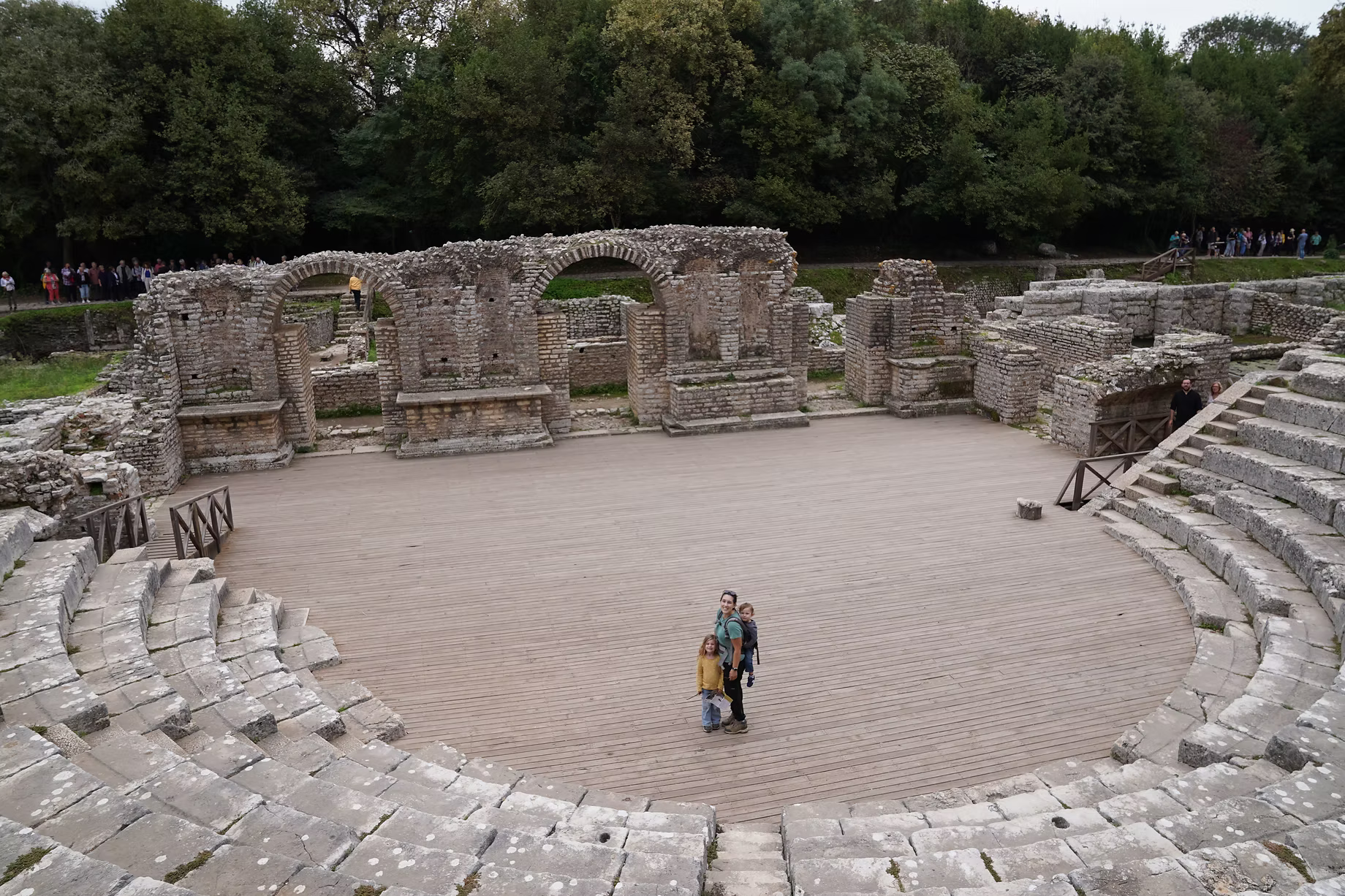
Butrint is one of Albania’s most significant archaeological sites and a UNESCO World Heritage Site, located near the breathtaking Albanian Riviera. The city’s history stretches back to the 8th century BC and reflects influences from the Greeks, Romans, and Byzantines.
To get to Butrint, it’s a straightforward 30-minute drive from the coastal town of Saranda. The entrance fee (as of 2024) is 1000 Albanian lek (approximately €10) per adult. The entry fee is paid in cash only and there is free parking on site. Arriving early is wise to explore the site before the crowds of tour groups arrive.
Among the expansive ruins at Butrint, you will find a well-preserved Roman theater with seating for up to 1,500 spectators, a stunning Byzantine Basilica, and remains of an ancient aqueduct that showcases advanced engineering for its time. You’ll also come across a castle, Roman forum, city walls and gates, and merchant houses. Structures within the city of Butrint were constructed in various time periods, spanning over 2500 years, demonstrating rule by many empires along the way. The lush landscape surrounding these ruins and the nearby lake enhances Butrint’s charm. The best seasons to visit are spring and early autumn, when you can enjoy mild weather and vibrant nature.
Key tip: Bring insect repellent!
Historical Timeline of Butrint:
| Period | Key Events |
|---|---|
| Foundation (8th century BC) | Founded by Greek settlers from Corfu as the colony of Buthrotum. |
| Greek Period (4th–3rd centuries BC) | Became an important city-state with temples and a theater reflecting Greek culture. |
| Roman Influence (2nd century BC) | Came under Roman control; expanded with baths, villas, and monumental structures, including the Roman Theater. |
| Byzantine Period (4th–12th centuries AD) | Part of the Byzantine Empire; city rebuilt and fortified, with Christian structures like the Baptistery added. |
| Venetian Rule (15th–17th centuries) | Venetians fortified the city; strategic importance declined and the city gradually faded. |
| Ottoman Era (17th–19th centuries) | Butrint largely abandoned; reduced to a small settlement. |
| Early 20th Century | Rediscovered by archaeologists; excavations uncovered the city’s remarkable ruins. |
| UNESCO World Heritage Site (1992) | Designated a UNESCO World Heritage Site for its cultural and natural significance. |
| Conservation and Tourism (Present) | Managed by the Butrint Foundation; a major tourist destination with ongoing preservation efforts. |


Where to Stay:
Consider staying in the town of Ksamil, which is nearest to Butrint.
2. Gjirokastër: A Stone Town of Cultural Significance

Known as the “City of Stone,” Gjirokastër is another significant UNESCO World Heritage Site in Albania, celebrated for its stunning Ottoman-era architecture. This town, located in the southern part of Albania, provides breathtaking views over the Drino River valley.
Traveling to Gjirokastër from Tirana takes around 3.5 to 4 hours by road. The entrance fee (as of 2024) to Gjirokastër Castle, one of the main attractions, is 400 lek (approximately $4). Children under 12 are free, and payment is cash only.
If you’re driving to Gjirokastër, you can find convenient and affordable parking HERE.
When you arrive, take time to explore the cobblestone streets and beautiful bazaar area, selling authentic handicrafts, textiles, jewelry, and other souvenirs. You’ll find so many wonderful places to shop, eat, and explore around the old town here. Visitors can explore the beautifully preserved Zekate House, a 19th-century mansion with stunning views, and the Ethnological Museum, which offers a glimpse into traditional Albanian life, while Skenduli House provides insight into Ottoman-era family life.
After exploring the old town, make the climb up to the impressive Castle of Gjirokastër.
Be careful, as there are a lot of uneven steps leading to the castle. Along the route, you’ll encounter many vendors offering handmade goods and fruits for sale.
Gjirokastër Castle is one of the largest and most impressive fortresses in all of Albania, dominating the town and offering visitors a fascinating journey through history. Inside the castle, you can explore its ancient walls, towers, and fortifications, as well as enjoy stunning panoramic views of the town and the surrounding valley. The castle houses a museum showcasing artifacts related to Albania’s military history, including old weapons, armor, and an exhibition on the country’s communist era. A standout feature is the collection of large cannons, some of which are still intact, as well as the remains of a secret underground tunnel.

Historical Timeline of Gjirokastër:
| Period | Key Events | Why It Matters |
|---|---|---|
| Hellenistic Period (4th–3rd century BC) | Early settlements developed in the region around modern Gjirokastër. The area was influenced by Illyrian tribes and nearby Greek colonies. | Marks the earliest known habitation of the area and its importance as a strategic settlement in southern Albania. |
| Roman Era (2nd century BC – 5th century AD) | The region became part of the Roman Empire, connecting local settlements to major trade routes across the Balkans. | Roman influence helped shape regional trade, infrastructure, and cultural exchange. |
| Byzantine Era (6th–12th centuries) | Gjirokastër developed as a fortified town under Byzantine control. Early defensive structures were built on the hill where the castle now stands. | Established the city as an important defensive stronghold and introduced strong Christian influences. |
| Ottoman Conquest (15th century) | The city was incorporated into the Ottoman Empire. Gjirokastër grew into an administrative and cultural center in southern Albania. | Ottoman rule shaped the city’s unique architecture, including its iconic stone houses with slate roofs. |
| Ottoman Cultural Flourishing (17th–19th centuries) | The city prospered through trade and craftsmanship. Wealthy families built large stone houses that still define the city’s skyline today. | This period created the distinctive architectural character that makes Gjirokastër famous today. |
| Albanian National Awakening (late 19th – early 20th century) | The city became involved in movements promoting Albanian identity and independence from Ottoman rule. | Gjirokastër played a role in Albania’s political and cultural transformation. |
| Albanian Independence (1912) | Albania declared independence from the Ottoman Empire, and Gjirokastër became part of the new Albanian state. | Marked the beginning of modern Albanian national history. |
| Communist Era (1944–1991) | The city was the birthplace of Enver Hoxha, Albania’s communist leader. Industrialization affected parts of the country, but Gjirokastër’s historic architecture remained largely preserved. | Preservation during this period helped maintain the city’s historic character. |
| UNESCO Recognition (2005) | Gjirokastër was designated a UNESCO World Heritage Site for its well preserved Ottoman architecture and historic urban landscape. | International recognition helped protect the city and boosted tourism. |
| Modern Tourism and Preservation | Today Gjirokastër is a major cultural destination known for its castle, traditional stone houses, and cobblestone streets. | The city is now one of Albania’s most important historical and tourism sites. |
Late spring and early autumn are ideal for visits, ensuring pleasant weather for exploration.
Where to Stay:
Check out these centrally located accommodation options in Gjirokastër:
3. Berat: The City of a Thousand Windows

Berat, another UNESCO World Heritage Site, is famous for its blend of cultural and architectural styles. Known for its distinct Ottoman architecture and numerous windows, Berat sits at the base of Tomorr Mountain.
The journey from Tirana to Berat takes about 2 hours by car, making it an accessible stop. Once you arrive, either drive or walk up to the impressive Berat Castle, which offers sweeping views of the city and the picturesque Osum River. Inside the castle, explore ancient churches and even houses where some locals still reside.
Inside the castle walls, which are free to enter, you’ll come across restaurants, guesthouses, ruins, observation decks, local vendors, and a heritage museum. Exploring all that Berat Castle has to offer will take about 2 hours at a leisurely pace. The main sites include Ruins of the Red Mosque, Holy Trinity Church, and the Main Viewing Platform.

Make your way back down to the center and wander through Berat’s narrow streets, each adorned with charming, window-laden houses. The area is famous for wine production, so consider stopping at a winery to taste the local varieties. Take time to walk over Gorica Bridge or Ura e Varur. And don’t forget to stop by the Ethnographic Museum, located in a historic home, to gain insight into the region’s cultural practices.
Historical Timeline of Berat:
| Period | Key Events |
|---|---|
| Early Settlement (4th century BC) | Evidence of Illyrian settlements; city known as Antipatreia, founded by King Antipater. |
| Roman and Byzantine Eras (2nd century BC – 5th century AD) | Became an important urban center; Berat Castle expanded; Christian churches constructed. |
| Ottoman Conquest (1417) | Captured by the Ottoman Empire; became an administrative center; mosques, baths, and bridges built. |
| Religious Harmony (15th–19th centuries) | Coexistence of Muslim, Orthodox Christian, and Catholic communities; reflected in city architecture. |
| Economic Prosperity (15th–19th centuries) | Thrived due to silk production, handicrafts, and agriculture. |
| Albanian Independence (1912) | Became part of the newly established Albanian state; early political and economic challenges. |
| Communist Era (1946–1991) | Industrialization and collectivization affected daily life, but historical architecture largely preserved. |
| UNESCO World Heritage Site (2008) | Designated for well-preserved Ottoman houses, mosques, and castles; known as the “City of a Thousand Windows.” |
| Tourism and Preservation (Present) | Major tourist destination; ongoing efforts to preserve historic architecture and promote sustainable tourism. |
Spring and fall are the best times to visit, providing mild temperatures and fewer tourists.
Where to Stay:
Here are a few accommodation options in Berat, all under USD $100/night:
Looking for a full list of tried and tested travel essentials?

Other Historic Sites You Shouldn’t Miss in Albania
Beyond the UNESCO sites, Albania is filled with historic locations that are just as fascinating to explore. From ancient Greek ruins to castles connected to Albania’s national hero, these sites provide even more insight into the country’s past and cultural identity.
Many of these destinations are less crowded than the UNESCO sites but offer equally memorable experiences for travelers interested in Albania’s history.
4. Apollonia: The Ruins of an Ancient Greek City

Apollonia Archaeological Park, located near the village of Pojan in Southern Albania, is a key player in Albania’s archaeological history. Founded in the 6th century BC, it was once a prosperous Greek city and an important trade center during the Roman Empire. Apollonia was once a thriving city of the Illyrian and Greek civilizations, later becoming an important Roman colony. It was renowned for its strategic location along the Via Egnatia, the Roman road that connected the Adriatic to the Byzantine Empire.
Though NOT a UNESCO World Heritage Site yet, there has been submission of Apollonia to the tentative site inclusion list, noting the exceptionally intact nature of the structures contained in the ancient city ruins. The site boasts several well-preserved ruins, including a Theater, the Temple of Apollo, a Basilica, and Roman baths, all surrounded by picturesque landscapes. The Apollonia Archaeological Museum, housed in a restored monastery, displays artifacts from the site, providing insight into its rich history.

Parking on site is free, and entry to the site costs 600 lek per adult (as of 2024), making it an affordable and accessible visit. To get to Apollonia, visitors can travel by bus or car from Tirana, the capital, which is about 2 hours away.
The parking lot can be found HERE.
Surrounded by peaceful landscapes, Apollonia offers the perfect setting for a leisurely day trip. Visiting in spring or fall will reward you with comfortable weather and scenic views. The combination of ancient ruins, a peaceful setting, and fascinating history makes Apollonia a must-visit for travelers seeking to dive deeper into Albania’s past.
Historical Timeline of Apollonia:
| Period | Key Events |
|---|---|
| Foundation (6th century BC) | Founded by Greek settlers from Corfu; named after Apollo; strategically located along the Via Egnatia. |
| Greek and Illyrian Influence | Flourished as a Greek colony; influenced by Illyrian tribes; built temples and a theater. |
| Roman Colony (2nd century BC) | Became a Roman colony; expanded infrastructure including Agora, basilica, and public baths. |
| Prominence and Decline (3rd century AD) | Continued to thrive under the Roman Empire; declined due to invasions and natural disasters. |
| Byzantine Influence (4th–6th centuries AD) | Remained inhabited but lost political and economic significance. |
| Medieval Period | Largely abandoned; overgrown and isolated due to marshlands and shifting rivers. |
| Rediscovery (18th–19th centuries) | Archaeologists began excavating the site, uncovering city walls, theater, and public buildings. |
| Archaeological Site Today | Major tourist and archaeological site; includes the Apollonia Archaeological Museum showcasing artifacts from Greek, Roman, and Byzantine periods. |
Where to Stay:
The closest place to stay the night before your Apollonia exploration would be the town of Fier, which is only about a 15-minute drive away. Here are some options for accommodation in Fier:
5. Krujë: The Stronghold of Skanderbeg

Krujë is a town steeped in history, closely tied to Albania’s national hero, Skanderbeg, who led the resistance against the Ottoman Empire in the 15th century. The iconic Krujë Castle has played a vital role in defending against Ottoman invasions and stands proudly overlooking the town. The town is just 30 kilometers north of Tirana, easily accessible by car or public transport. If driving, consider this parking lot located in the center.
Entry to the Kruja Castle grounds is free (as of 2024), however, there is a fee of 500 lek per adult if you want to enter the Skanderbeg Museum.
Kruja is also home to the Old Bazaar, a charming area filled with cobblestone streets, traditional shops, and local crafts, making it a popular destination for tourists seeking to experience authentic Albanian culture. This bazaar is one of the oldest in Albania, spanning back about 400 years! As you stroll through the historic bazaar, you can find unique handicrafts and souvenirs, such as traditional woven rugs, children’s toys, clothing, and jewelry, as well as traditional souvenirs like magnets and postcards.

The town has been a key center for Albanian identity and resistance throughout history, and today it remains a symbol of national pride. With its blend of historical landmarks, natural beauty, and vibrant culture, Kruja is a must-visit destination for those exploring Albania’s heritage.
Historical Timeline of Kruja:
| Period | Key Events |
|---|---|
| Illyrian Origins (3rd century BC) | Early settlement by Illyrians; strategic hilltop location ideal for defense. |
| Roman and Byzantine Eras | Continued importance along trade routes; Krujë Fortress began to take shape. |
| Ottoman Conquest (15th century) | City came under Ottoman control; later became famous as Skanderbeg’s stronghold. |
| Skanderbeg’s Revolt (1443–1468) | Skanderbeg led Albanian resistance; Krujë Fortress held off several Ottoman sieges. |
| Sieges of Krujë (1466–1478) | Multiple Ottoman sieges; city fell in 1478 after Skanderbeg’s death. |
| Ottoman Rule (15th–19th centuries) | Administrative and military center; mosques, bathhouses, and other structures added. |
| Cultural and Religious Diversity | Muslim and Christian communities thrived; fortress remained a symbol of national identity. |
| Early 20th Century | Participated in Albanian independence (1912); experienced instability during Balkan Wars and WWI. |
| Communist Period (1946–1991) | Historical sites neglected or repurposed; focus on industrialization and socialist ideology. |
| Tourism and Restoration (Post-1991) | Krujë Fortress, Skanderbeg Museum, and old bazaar restored; city became a key tourist destination. |
| UNESCO Tentative List | Recognized for historical significance; part of UNESCO Tentative List highlighting Albanian heritage. |
Where to Stay:
The center of Kruje is very walkable and full of charming shops and cafes to explore. Alternatively, you could choose to stay in the capital city of Tirana, which is only an hour’s drive away or easily reached by public transport. Here are some options in the center of Kruja:
6. Rozafa Castle: The Legend of the Fortress

Rozafa Castle, located on a hill above Shkodra, presents stunning views and a captivating legend. According to folklore, the castle was built by three brothers who could only complete it by sacrificing their sister, Rozafa, who was entombed in the walls.
Called “the legend of the woman in the wall,” according to local folklore, the castle was being built by three brothers who discovered that every night the walls they constructed would mysteriously collapse. A wise man told them that the only way to keep the walls standing was to sacrifice a living person. The youngest brother’s wife, Rozafa, volunteered to be walled in alive. She requested that one of her breasts, one of her eyes, and one of her feet remain outside the wall so she could nurse her child, see her family, and move. The brothers agreed, and thus, Rozafa was walled into the castle, her body becoming part of its structure. The story of Rozafa’s sacrifice has become one of Albania’s most enduring legends, symbolizing themes of loyalty, sacrifice, and endurance.
You can easily access Rozafa Castle from Shkodra, which is about a 2-hour drive from Tirana. The entrance fee (as of 2024) is roughly 400 lek per adult, with children under 12 being free. Payment is cash only. Visitors can explore the impressive ruins while enjoying panoramic vistas of surrounding lakes and mountains.

Additionally, Rozafa Castle houses a small museum that details its long history. The optimal time for a visit is late spring or early autumn, when the temperatures are pleasant, and the scenery surrounding the castle is at its best.
There is a small parking lot at the entrance of the castle, or you could park at the bottom and walk up like we did. The road leading to the top is narrow and winding. We parked on the side of the road HERE for free.
Rozafa Castle is a symbol of Albania’s rich cultural heritage, its complex history of occupation, and its legends that continue to be passed down through generations. It serves not only as an architectural and historical landmark but also as a cultural and national symbol of sacrifice, strength, and resilience.
Historical Timeline of Rozafa Castle:
| Period | Key Events |
|---|---|
| Illyrian Roots (4th century BC) | First known settlement by Illyrian tribes; castle used as a fortress due to strategic location. |
| Roman and Byzantine Influence | Fortified and used as part of the region’s defense network throughout Roman and Byzantine periods. |
| Venetian Rule (14th–17th centuries) | Venetians expanded and reinforced the walls; controlled access to the Buna River and Adriatic routes. |
| Ottoman Period (15th–19th centuries) | Fell under Ottoman control in 1479; remained an important military and administrative center with minimal structural changes. |
| Decline and Preservation (Late 19th – 20th centuries) | Fell into disrepair after Ottoman departure; archaeological and restoration efforts began in the 20th century. |
| Tourism and Archaeological Site (Present) | Major tourist attraction; visitors can explore ruins, walls, towers, museum artifacts, and panoramic views of Shkodër and Lake Shkodra. |
Where to Stay:
Shkoder is one of the largest and oldest cities in Albania, and the center is easily walkable, with many local shops, restaurants, and cafes to try, and just a short distance from Rozafa Castle. Consider one of these options in the city center:
Tips for Visiting Historic Sites in Albania with Kids
Exploring Albania’s historic sites can be a magical experience for families. From ancient castles perched on hillsides to cobblestone streets in UNESCO towns, children can feel like time travelers as they explore centuries-old history firsthand. With a bit of planning, visiting these sites can be both educational and fun for kids of all ages.
1. Dress for Adventure
Historic sites often involve uneven terrain, cobblestone streets, or steep hills. Make sure everyone wears comfortable, sturdy shoes and breathable clothing, especially during warmer months. Hats and sunglasses are also recommended for exposed sites.
2. Pack Essentials
Many castles, ruins, and archaeological parks have limited facilities, so bring water, healthy snacks, and sunscreen. A small backpack is ideal for carrying these essentials, along with wet wipes or hand sanitizer for quick cleanups.
3. Plan for Shorter Attention Spans
Kids may tire quickly or lose interest in long historical explanations. Plan shorter, engaging visits and allow plenty of time for exploration and play. Let them climb castle walls, walk ancient streets, or peek into towers. Interactive experiences help children connect with history more than reading signs alone.
4. Combine History with Scenery
Many historic sites in Albania are set in stunning natural surroundings. Castles like Rozafa overlook rivers and lakes, and hilltop towns like Gjirokastër offer panoramic views of the valleys below. Encourage kids to take in the scenery, snap photos, or sketch what they see—it adds a creative layer to the historical experience.
5. Use Stories to Bring History to Life
Children love stories about real people and legendary figures. Share tales of Skanderbeg in Krujë, ancient Greek settlers in Apollonia, or the Ottoman-era history of Berat. Storytelling transforms stone walls and ruins into adventures full of intrigue, heroism, and culture.
6. Visit Early or Late in the Day
During the summer months, Albania can get very hot, especially at open-air archaeological sites. Plan visits early in the morning or later in the afternoon to avoid peak heat and crowds.
7. Combine Learning with Fun Activities
Some sites offer guided tours, workshops, or interactive exhibits. For example, museums in Berat, Gjirokastër, and Krujë often provide hands-on activities or kid-friendly explanations. Consider including these in your itinerary to make history tangible and memorable.
8. Take Breaks and Be Flexible
Historic sites can be larger and more physically demanding than expected. Build in rest stops, picnic breaks, and flexibility in your schedule. Children will appreciate the downtime, and parents can enjoy the visit more.
9. Capture Memories
Encourage kids to document their visit through drawings, photography, or journaling. This not only makes the experience more memorable but can also be a great way to review what they’ve learned afterward.
10. Encourage Curiosity
Ask questions like, “What do you think life was like in this castle?” or “How do you think people used this building hundreds of years ago?” Engaging children with questions sparks their imagination and keeps them interested throughout the visit.
With careful planning and an emphasis on fun, visiting Albania’s historic sites can be an unforgettable, educational adventure for the whole family. Kids not only learn about history but also develop an appreciation for culture, architecture, and the stories that shaped the country.
Albania’s historical sites are a gateway to understanding the country’s rich and diverse heritage. From the ancient ruins of Butrint and Apollonia to the charming streets of Gjirokastër and Berat, every destination has a unique story to share. The castles and museums provide valuable insights into the triumphs and challenges that have shaped Albania over the centuries.
For those eager to discover history, these sites offer more than just glimpses into the past. They present a connection to the vibrant present of Albania. As you plan your adventure through this stunning country, consider visiting these significant locations to truly immerse yourself in Albania’s cultural richness and historical significance. Whether you are a passionate historian, an eager traveler, or simply in search of adventure, you will find Albania’s historical treasures are waiting for you to explore.
Check out these videos from Albania:



Leave a Reply