
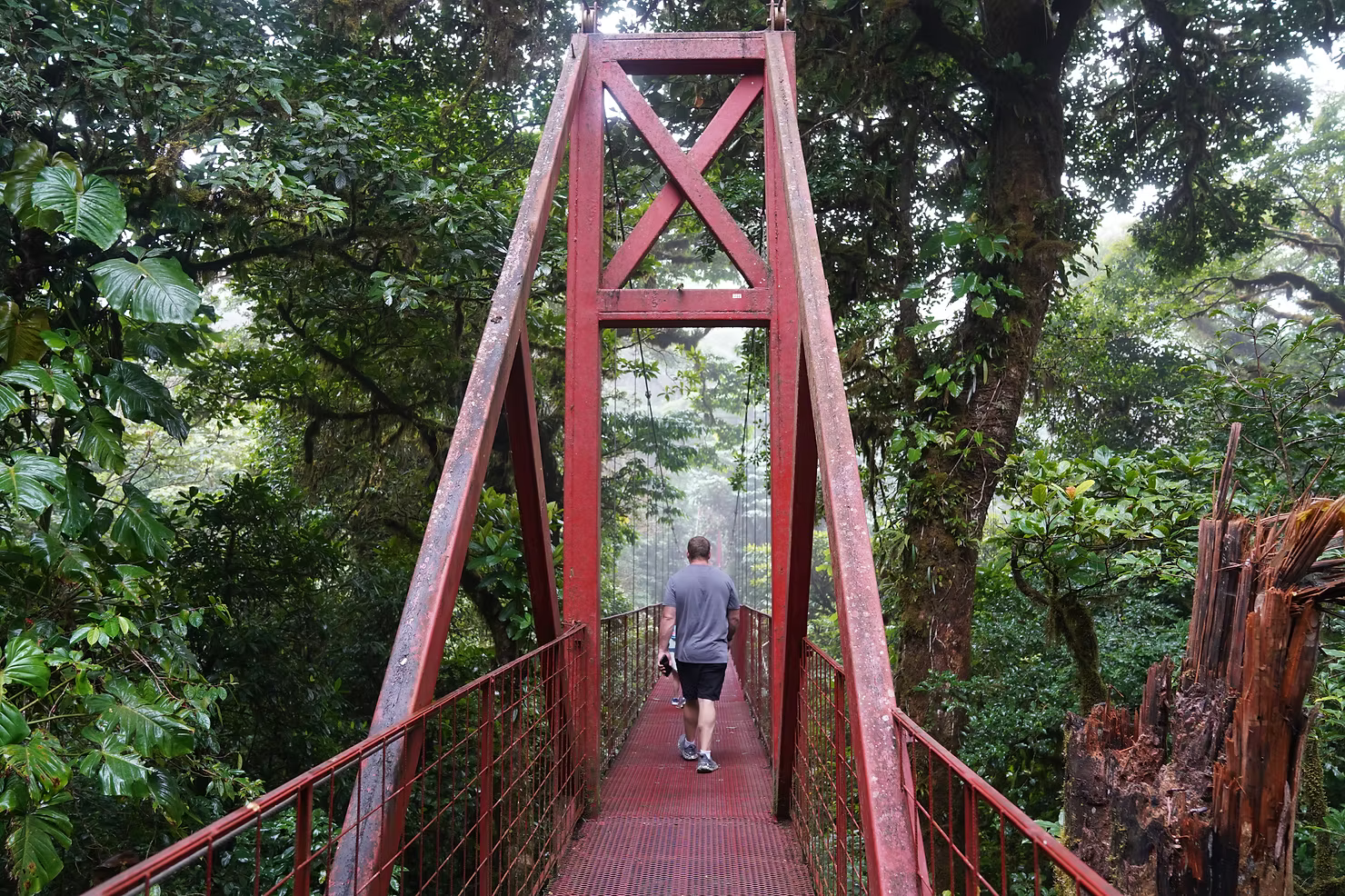
Planning a family trip to Costa Rica is exciting — but knowing exactly what to pack can make or break your experience. Between rainforests, beaches, hot springs, volcanoes, waterfalls, and long scenic drives, Costa Rica requires more than a basic vacation packing list — especially when you’re traveling with kids. From navigating muddy jungle trails and sudden rainstorms to keeping children comfortable on long road trips and connected for navigation and safety, being properly prepared makes all the difference.
This ultimate family packing guide for Costa Rica goes beyond generic travel advice to cover the real essentials families actually need. You’ll find season-specific packing tips, rainforest-ready footwear advice, tech and connectivity must-haves, rainy season gear, family travel safety items, and practical tips we learned from traveling Costa Rica with kids ourselves. Whether you’re visiting in dry season or rainy season, heading to the beach, exploring the jungle, or road-tripping between destinations, this guide will help you pack smarter, travel lighter, and enjoy Costa Rica with your family stress-free.
Table of contents
- Important Things to Know Before Packing for Costa Rica
- Essential Travel Documents & Pre-Trip Must-Haves
- What to Wear in Costa Rica: Clothing Essentials
- Seasonal Packing Essentials
- Tech, Connectivity & Navigation
- Family Road Trip & Entertainment Essentials
- Adventure & Nature Gear for Kids
- Health, Safety & First Aid
- Baby & Toddler Travel Gear
- Smart Packing Tips for Families
- Being Prepared is Key
Read Our Full 10-Day Itinerary!
Bookmark these reads for later:
- Where to Stay in La Fortuna, Costa Rica: Family-Friendly Hotels & Areas
- Best Budget Stays in Costa Rica for Families: Regional Guide
- Best Tours in La Fortuna, Costa Rica: Adventures for Families
- 3-Day Family-Friendly Itinerary in La Fortuna, Costa Rica
- Best Restaurants in La Fortuna, Costa Rica for Families
- Best All-Inclusive Resorts in Costa Rica For Families (2026 Guide)
- 10 Unique Things to Do in Costa Rica for Families & Where to Find Them
- Costa Rica Bucket List – 50 Amazing Things to Do & See
- Best Places to See Wildlife in Costa Rica: Top National Parks and Tours
- Hot Springs in La Fortuna, Costa Rica: Family Guide to the Best Thermal Pools
- Is Costa Rica Expensive for Families? Cost Breakdown + Budget Tips
- Costa Rica Travel Tips for Families: 50 Things Every Family Needs to Know
- Costa Rica Car Rentals Made Easy: What You Need to Know Before You Go
- Must-Try Foods in Costa Rica: Top Dishes Even Kids Will Love
Shop Our Kids Activity Workbooks – Available As Instant PDF Downloads!

This blog may include affiliate links, meaning if you buy something through one of our links, I may earn a small commission at no extra cost to you. Affiliate links help sustain our blog and allow us to continue traveling. Thank you for your support!
Important Things to Know Before Packing for Costa Rica
Before you start filling suitcases, it’s important to understand a few realities about traveling Costa Rica as a family:
- Costa Rica has two main seasons: dry season and rainy season — and your packing needs change significantly between them.
- Rain showers can happen suddenly, even during dry season.
- Many roads are unpaved, muddy, or uneven.
- Trails, walkways, and sidewalks are often rocky, slippery, or uneven.
- You’ll likely walk much more than expected.
- Long car rides between destinations are common.
- Humidity affects clothing, electronics, and gear.
- Not all locations have easy access to stores for replacements.
Packing for Costa Rica is about being prepared, not overpacking.
Before you start packing for Costa Rica, it’s important to research the weather during the time of year you’ll be visiting. You’ll also want to think about the activities you have planned—whether that’s swimming, hiking, or exploring the rainforest. Both the climate and your itinerary will have the biggest impact on what you should bring. Below, we’ve outlined essential items to pack, what’s worth leaving at home, and the must-haves to ensure a smooth and enjoyable visit to this beautiful country.
Dry Season (December–April)
- Hot, sunny days.
- Minimal rain.
- Dusty roads and trails.
- Strong sun exposure.
Focus on: sun protection, breathable clothing, hydration gear, lightweight layers, beach gear.

Rainy Season (May–November)
- Daily rain showers.
- High humidity.
- Muddy trails and roads.
- Cooler evenings in rainforest and mountain areas.
Focus on: waterproof outerwear, quick-dry clothing, dry storage, rain protection for electronics.
Essential Travel Documents & Pre-Trip Must-Haves
Before you even start packing your bags, there are a few essential items you’ll want to organize in advance. These travel documents and logistics are just as important as clothing and gear—and having them prepared ahead of time will save you stress, time, and potential issues once you arrive in Costa Rica.
What to organize before you leave:
- Passport with at least six months’ validity.
- Visa or eVisa (if required for your nationality). *
- Travel insurance covering medical care and outdoor activities.
- Printed and digital copies of important documents.
- Driving license and International Driving Permit (if renting a car).
- Travel credit cards and some local cash.
- eSIM or SIM card for mobile data and navigation.
*US citizens can visit Costa Rica visa-free for up to 180 days.

Passport (with at least six months’ validity)
Many airlines may require passports to be valid for at least six months beyond your planned departure date. This rule exists to ensure travelers don’t get turned away at their destination or face passport expiration issues while abroad. If your passport is close to expiring, you may be denied boarding by the airline or refused entry upon arrival. Always double-check your expiration date well before your trip and renew early if needed.
Visa (if required)
Visa and entry requirements for Costa Rica vary depending on your nationality, but many travelers do not need a visa for typical family vacations.
- U.S. citizens: Do not need a visa for short tourist stays in Costa Rica. With a valid passport, U.S. travelers can typically enter and stay for up to 180 days without applying for a visa in advance. Proof of onward travel is usually required.
- UK and EU citizens: British, European Union, and other Schengen-area passport holders do not generally need a visa for tourist visits to Costa Rica. A valid passport is required, and proof of onward travel and sufficient funds may be requested on arrival.
- Australian citizens: Australians also typically do not need a visa for tourism stays of up to 180 days with a valid passport; travelers must show proof of onward travel and meet entry requirements at immigration.
Travel Insurance
Travel insurance is a must, especially if you plan to hike, participate in adventure activities, go off-road, or visit remote areas. Medical evacuation and emergency care can be expensive, and it’s wise to have even a basic level of coverage. While Costa Rica does not generally require travel insurance for entry, it’s strongly recommended.
Keep in mind:
- Most domestic health insurance plans do not cover you overseas.
- Some medical facilities may require payment upfront.
- Outdoor and adventure activities often require specific coverage.
A comprehensive travel insurance policy gives peace of mind in case of illness, injury, delays, or unexpected changes. We usually use Squaremouth to search and compare travel insurance plans before every trip. It allows us to easily compare coverage options, limits, and prices from multiple providers in one place, making it simple to find the exact level of coverage we need—without going over budget.
Printed and Digital Copies of Important Documents
Always carry physical and digital copies of your passport, visa, travel insurance, and ID. We photocopy all of our documents before every trip so we have backups in case of loss or emergency. Folded copies are easy to keep in your wallet or day bag while leaving the originals secured in your accommodation’s lockbox.
Some countries require travelers to carry identification at all times. However, due to theft and pickpocketing risks, we don’t recommend carrying your original passport unless absolutely necessary. When driving, you should always have your original documents with you—otherwise, copies are usually sufficient for day-to-day exploring.
Driving License & International Driving Permit (IDP)
If you plan to rent a car, bring your regular driving license and consider getting an International Driving Permit (IDP). In the U.S., you can get one for about $20 at any AAA office.
Costa Rica does not require an IDP for tourists in Costa Rica using English-language licenses, but some rental agencies may ask for it. We always get one anyway—it’s inexpensive, easy to obtain, and avoids complications. IDPs are typically valid for one year, so they can be used for multiple trips.
Credit Cards & Local Cash
It’s wise to travel abroad with at least two credit cards. We usually bring one Visa and one MasterCard, since some vendors may accept one but not the other (though most accept both). Make sure the cards you choose don’t charge foreign transaction fees—this can save you a significant amount of money. The cards that usually come along with us these days are the Capital One Venture X and the Chase Sapphire Preferred. Both have zero foreign transaction fees and have generous sign-on bonuses!

Alert your credit card company!
Be sure to alert your credit card issuers before travel so your cards don’t get locked for suspicious activity. We’ve had one of our cards locked while traveling before and being stuck without a payment method is definitely something you want to avoid.
Credit cards are widely accepted in Costa Rica, but it’s still important to carry some local currency (Costa Rican colones) for smaller shops, tips, and cash-only accommodations.
Our best tip?
We recommend ordering local currency through your home bank before your trip, as this is often the most cost-effective option with little to no conversion fees. Airport exchanges and currency offices usually have higher rates.
And don’t exchange too much—converting leftover money back to USD often means losing value.
We also carry some USD as a backup, which can be exchanged locally if needed. This is often cheaper than withdrawing cash from ATMs abroad, where fees can be high. Any cash leftover simply comes back with us to use at home.
eSIM or SIM Card for Mobile Data
Reliable mobile data is essential for navigation, communication, and booking on the go. We almost always use Holafly or Airalo for eSIMs while traveling.
Get 15% off!
Click here for 15% off your first purchase on an eSIM with Airalo
A few key things to know:
- Your phone must be unlocked to use an eSIM (we had to pay off our phones and request unlocking from our carrier).
- Holafly offers unlimited data plans
- Airalo offers pay-per-GB plans
Our best tip?
We usually put unlimited data on one phone for GPS and daily use, and a smaller, per GB plan on the other for emergencies. These eSIMs don’t include a local phone number, but data access allows us to use WhatsApp to communicate with each other, family, guides, and hosts.
Be sure to install your eSIM before your flight while you still have WiFi. It needs an internet connection to activate, and not all airports offer reliable WiFi—we’ve learned this the hard way!
What to Wear in Costa Rica: Clothing Essentials
Packing clothing for Costa Rica isn’t about style — it’s about comfort, function, and adaptability. Between humid rainforest climates, beach days, sudden rainstorms, long outdoor excursions, and uneven terrain, families need clothing that works in multiple environments. The right clothing choices will keep everyone comfortable, dry, protected from the sun, and ready for adventure — whether you’re hiking in the jungle, swimming at waterfalls, or relaxing at the beach.
This section breaks down exactly what families should pack for everyday wear, beach days, rainy weather, and active exploration — with specific, practical recommendations that actually work in Costa Rica’s climate.

Everyday Clothing Essentials
Focus on lightweight, breathable, and quick-drying fabrics that can handle heat, humidity, and movement.
- Lightweight, breathable shirts (moisture-wicking fabrics work best).
- Quick-dry shorts and lightweight but durable pants suitable for walking and hiking.
- Long-sleeve sun shirts for UV protection and bug prevention.
- Light sweater or hoodie for evenings and cooler mountain areas.
- Pajamas suitable for warm, humid nights.
- Comfortable underwear and socks made from breathable fabrics.
These items form your daily rotation for sightseeing, travel days, town exploration, and casual outings.
Check out these women’s hiking pants! My go-to for hiking in warm weather, they’re water resistant, durable, and something I take on every trip!
Beach & Pool Clothing
Costa Rica’s beaches, hot springs, and hotel pools mean swimwear will be used frequently — not just occasionally.
- Multiple swimsuits per person (so one can dry while another is worn). We usually pack 2 per person.
- Rash guards for kids for sun protection and extended water play.
- Cover-ups or lightweight wraps.
- Microfiber travel towels for excursions, waterfalls, and beach days.
- Beach toys or floaties (if planning to spend most of your time at the beach or pool).
Rainy Day & Wet Weather Clothing
Even in dry season, rain is common in rainforest regions — and during rainy season, daily showers can be expected. These items are essential for staying dry, protecting electronics, and staying comfortable during rain showers and wet adventures.
- Waterproof rain jackets for adults and kids.
- Lightweight ponchos for quick protection.
- Packable umbrella.
- Quick-dry hiking pants or leggings.
- Dry bag for day trips and excursions to keep your things dry.
- Waterproof phone cases.
- Waterproof camera cases or protective covers.
Footwear: What Actually Works in Costa Rica
Good footwear is one of the most important packing decisions for Costa Rica. Families will encounter muddy trails, rocky paths, rainforest terrain, dirt roads, uneven stone walkways, slippery surfaces, and long days on their feet.
What we recommend:
- Hiking shoes or hiking boots (used daily outside of beach days).
- Sport sandals (Teva/Keen-style sandals for walking and water activities) – work great as water shoes as well.
- Water shoes for rivers, waterfalls, hot springs, and rocky beaches.
- Flip flops or sandals for pool areas, hotel use, and quick outings.
What you can skip:
- Regular sneakers — we found them unnecessary and uncomfortable in wet, muddy, and humid conditions.
- Heels or flats – just not practical for rainforest adventures, hiking, or beach days.
Essential Clothing for Kids in Costa Rica
Kids benefit from the same functional clothing principles as adults — but comfort and durability matter even more.
- Quick-dry play clothes.
- UV-protective swim shirts and rash guards.
- Lightweight long-sleeve shirts for sun and bug protection.
- Waterproof rain jackets.
- Comfortable hiking shoes or trail shoes.
- Sport sandals.
- Water shoes.
- Extra socks and spare outfits for wet days.
- Hats for sun protection are also key!
Children will get wet, muddy, and dirty — and that’s part of the fun in Costa Rica. Packing practical, washable, and quick-drying clothing makes daily life much easier for families.

Seasonal Packing Essentials
Costa Rica’s climate changes dramatically between seasons, and packing accordingly makes a huge difference in comfort and experience — especially for families. Rain, humidity, heat, and sun exposure all impact what you’ll actually use daily. Understanding the difference between the rainy season and dry season helps you pack intentionally instead of overpacking unnecessary items.
This section breaks down exactly what families should bring for each season so you’re prepared for Costa Rica’s unique weather patterns without overloading your luggage.
Rainy Season Packing (May–November)
Rainy season in Costa Rica doesn’t mean constant rain — but it does mean daily showers, high humidity, muddy terrain, and wet conditions, especially in rainforest regions and mountainous areas.
Rain Gear & Waterproof Protection
- Waterproof outerwear for adults and kids.
- Dry bags for excursions and day trips.
- Waterproof backpacks.
- Waterproof phone pouches.
- Rain covers for strollers.
- Waterproof camera bags.
Electronics & Moisture Protection
- Waterproof camera or waterproof housing.
- GoPro or Insta360 with waterproof casing.
Dry Season Packing (December–April)
Dry season brings hotter temperatures, strong sun exposure, and long sunny days — especially along the coasts and in open areas.
- Sun hats for all family members.
- Sunglasses with UV protection.
- UPF clothing for kids and adults.
- Plenty of sunscreen.
- Lightweight layers for evenings and higher elevations.
Looking for a full list of tried and tested travel essentials?

Tech, Connectivity & Navigation
Staying connected in Costa Rica isn’t just convenient — it’s essential for navigation, safety, communication, and trip planning. Families rely heavily on GPS, digital maps, booking confirmations, and location services, especially when road-tripping between destinations and exploring remote areas.
Having reliable power, connectivity, and backup systems prevents small tech issues from becoming major travel problems.
Power & Charging
- Portable power banks.
- Car chargers.
- Backup charging cables for all devices.
- International travel adapters. *
*Note that Costa Rica uses the same power outlets as the United States, so travel adaptors may not be needed.

Connectivity & Navigation
- eSIM or international SIM card for mobile data.
- Offline Google Maps downloaded before arrival – just in case!
- GPS access for driving and navigation. An eSIM can provide service for this!
- Saved hotel locations and routes offline.
These tech essentials keep your family connected, safe, and stress-free — even in areas with limited service, long driving distances, and unpredictable conditions.
Family Road Trip & Entertainment Essentials
Costa Rica involves long scenic drives between destinations. Make them easier for kids with a variety of activities and games to keep them occupied.
- Activity books.
- Coloring books.
- Sticker books.
- Tablet or iPad.
- Audiobooks.
- Downloaded movies and shows. Netflix or Hulu works best.
- Headphones.
- Snacks + snack containers.
- Neck pillows + comfort items.
For a full list of our favorite travel activities for kids, check out our Amazon Storefront!
Check out our Costa Rica kids activity books!

Adventure & Nature Gear for Kids
These items make rainforest and wildlife exploration more engaging for children:
- Child-sized binoculars. These worked great for our kids!
- Nature journals.
- Small backpacks.
- Refillable water bottles.
Binoculars are especially valuable — they make rainforest walks interactive and exciting for kids and turn wildlife spotting into an adventure. We were so glad to have brought them!

Health, Safety & First Aid
Packing basic health supplies ensures minor issues don’t disrupt your trip.
Health and comfort essentials:
- Basic first-aid kit: bandages, antibiotic ointment, children’s and adult versions of pain reliever, fever reducer, and antihistamine, alcohol wipes, and gauze pads are essential.
- Motion sickness medication if needed for bumpy roads and boat rides.
- Prescription medications, in labeled containers.
- Sunscreen and after-sun lotion.
- Bug spray is a must in Costa Rica!
- Hand sanitizer and wipes.
Baby & Toddler Travel Gear
Traveling in Costa Rica with a baby or toddler requires a different level of planning — but it doesn’t have to be overwhelming. Between uneven terrain, rainforest trails, humid weather, long drives, and outdoor adventures, the right gear can make daily life significantly easier and more comfortable for both parents and little ones.
If traveling with young children:
- Lightweight travel stroller, if preferred (we found no use for one here!)
- Baby carrier (essential for trails and uneven terrain). Our favorites are the Ergobaby Omni360 and the Tula Toddler Carrier.
- Swim diapers – we recommend reusable ones!
- Child-safe sunscreen.
- Baby-safe bug spray.
- Baby food, milk, bottles, and other necessary supplies.
- Portable noise machine (if needed for bedtime).
Helpful items for families:
- Sunglasses.
- Hats to protect from the sun.
- Snacks and snack containers.
- Refillable and insulated water bottles.
- Portable power banks to charge phones and devices.
- Small laundry bag to keep dirty clothes separate.
Smart Packing Tips for Families
Efficient packing is key to stress-free family travel. These packing tips for Costa Rica with kids cover space-saving techniques, organization hacks, and small but important items that are often forgotten.
Packing Strategy & Tips
- Use Packing Cubes: Organizes clothing and maximizes suitcase space.
- Roll Clothes: Rather than folding them, roll them! This minimizes wrinkles and saves space in your luggage.
- Pack Snacks: Great for long days and hiking adventures. Particularly important when traveling with kids.
- Optional Extras: Travel pillow, reusable shopping bag, binoculars for wildlife, waterproof phone case, small first aid kit.
Notes on Kids & Family Travel
- Pack extra layers for children, as they feel cold faster.
- Consider entertainment for travel time: coloring books, activity books, tablets with downloaded movies, or small travel games.
- Keep a small emergency kit: band-aids, antiseptic wipes, and motion sickness remedies. Don’t forget to pack kids’ versions of important medications!
- Always carry a change of clothes for kids.
Being Prepared is Key
Costa Rica is one of the most family-friendly adventure destinations in the world — but no one wants to overpack random vacation items or forget essential items. The combination of rainforest terrain, unpredictable weather, long drives, beach days, and jungle exploration requires intentional packing, especially when traveling with kids.
With the right gear, proper footwear, weather protection, tech tools, and family-focused essentials, Costa Rica becomes an easy, comfortable, and unforgettable experience. This packing guide is designed to help families travel prepared, confident, and stress-free — so you can focus on what actually matters: exploring waterfalls, spotting wildlife, soaking in hot springs, and creating unforgettable family memories in Costa Rica.
Pura vida!

Leave a Reply